
Community Conservation in Namibia
Namibia's innovative conservancy model that has put wildlife management in the hands of local communities with remarkable results
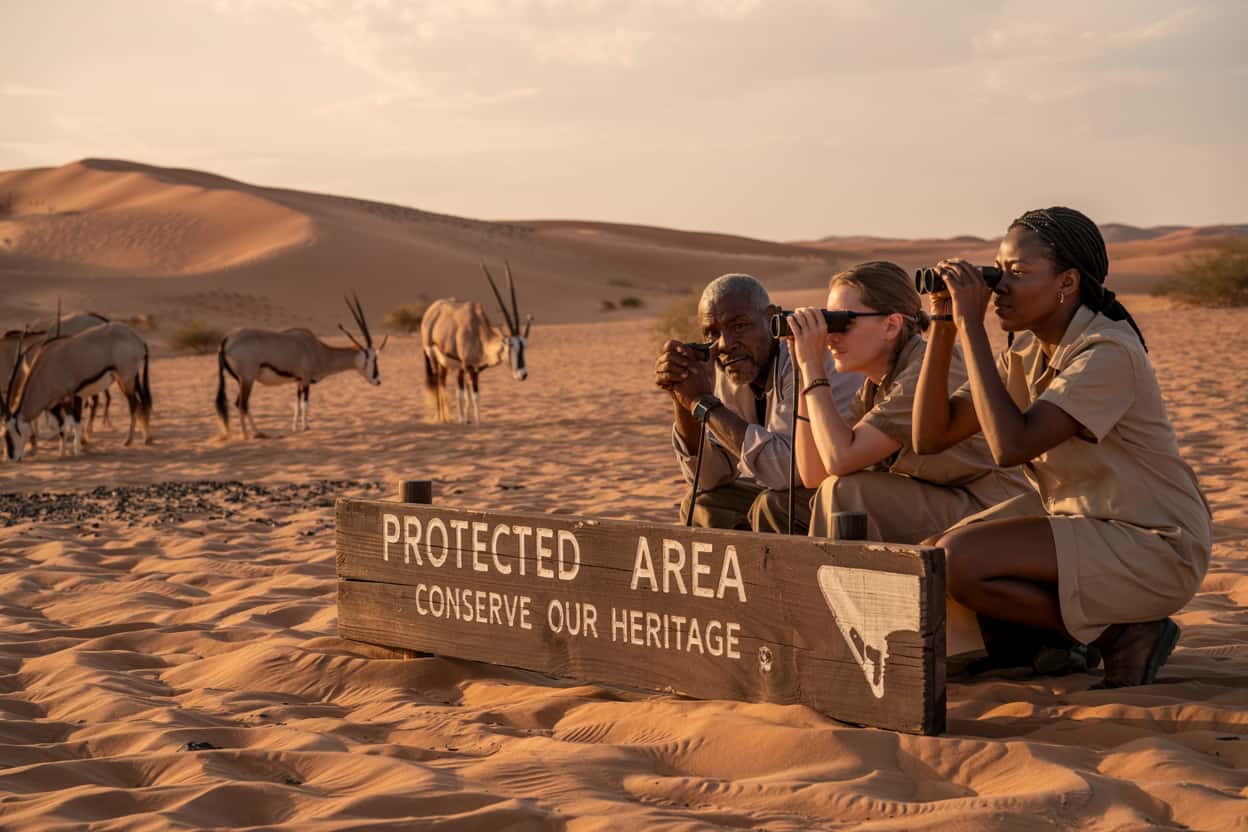
A Revolutionary Approach
Namibia's community conservancy program represents one of Africa's most innovative and successful approaches to conservation. By giving local communities legal rights to manage their wildlife and natural resources, Namibia has transformed conservation from a government-imposed restriction to a community-driven opportunity.
This groundbreaking model has not only restored wildlife populations across vast landscapes but has also created sustainable livelihoods for rural communities and become a blueprint for conservation worldwide.
The Birth of a Conservation Revolution
Namibia's community-based conservation story begins with a crisis. By the early 1980s, wildlife across the country had been decimated by a perfect storm of challenges:
- A devastating drought that stressed both wildlife and human communities
- Rampant poaching driven by political instability and poverty
- A colonial-era legal framework that gave rural communities no rights to wildlife
- The ongoing war for independence that made wildlife protection nearly impossible
In many areas, iconic species like elephant, rhino, and lion had been completely wiped out or reduced to unsustainable numbers. Wildlife was seen as either government property or a threat to livestock and crops, with little incentive for communities to protect it.
The turning point came with Namibia's independence in 1990. The new government, working with conservation visionaries, recognized that lasting protection of wildlife would only be possible if local communities became active partners in conservation rather than bystanders or opponents.
"If we want conservation to last, we need to put the people who live with wildlife at the center of the solution, not at the periphery."
— Garth Owen-Smith, Co-founder of Integrated Rural Development and Nature Conservation (IRDNC)
The Conservancy Model: Rights, Benefits, and Responsibilities
In 1996, Namibia's government passed landmark legislation that allowed rural communities to form conservancies - legally recognized entities with the right to manage and benefit from wildlife on their communal lands. This revolutionary approach was built on three key principles:
1. Legal Rights
Through conservancies, communities gained:
- Use rights over wildlife and tourism activities on their traditional lands
- Decision-making authority over how to manage natural resources
- Legal standing to enter into contracts with tourism and hunting operators
- Retention of revenue generated from wildlife and tourism
These rights transformed wildlife from a state-controlled liability into a community-managed asset, creating powerful incentives for conservation.
2. Tangible Benefits
Conservancies generate benefits for members through:
- Joint-venture tourism lodges that create jobs and generate revenue
- Sustainable trophy hunting that provides meat to communities and significant income
- Conservation-related employment as game guards, tour guides, and lodge staff
- Harvesting of natural products like devil's claw for medicinal markets
The key innovation was ensuring that benefits flowed directly to communities rather than being captured by government agencies or outside interests.
3. Management Responsibilities
With rights come responsibilities. Conservancies commit to:
- Wildlife monitoring through regular game counts and patrol reports
- Anti-poaching activities conducted by community game guards
- Sustainable management plans that set quotas for wildlife utilization
- Transparent governance including elected committees and financial reporting
This balance of rights, benefits, and responsibilities creates a self-reinforcing system where communities have both the incentive and the ability to protect their wildlife.
Did You Know?
Namibia is the only country in Africa where the conservation status of lions is improving rather than declining. The population has grown from approximately 20 lions in the northwest conservancies in the 1990s to over 150 today, primarily due to community conservation efforts.
From Pilot to National Movement
The conservancy movement in Namibia began with just four registered conservancies in 1998. Growth since then has been remarkable:
- By 2005, there were 31 conservancies covering 74,000 square kilometers
- By 2015, the number had grown to 82 conservancies
- Today, there are 86 registered conservancies covering over 166,000 square kilometers
- This represents approximately 20% of Namibia's land area
- Combined with national parks, nearly 45% of Namibia is now under some form of conservation management
One of the most remarkable aspects of this growth is that it has been entirely voluntary. Communities choose to form conservancies because they see the tangible benefits that neighboring communities have received.
Conservation Success Stories
The ecological impact of Namibia's conservancy system has been profound. Several dramatic wildlife recoveries stand out:
The Desert-adapted Elephant Recovery
In the early 1980s, Namibia's unique desert-adapted elephants in the northwest had been reduced to just two small populations totaling fewer than 50 individuals. Today, more than 200 elephants roam the northwestern conservancies, with local communities proudly protecting these magnificent animals that have become a major tourism draw.
Key to this success was the establishment of community game guards who prevent poaching and help manage human-elephant conflict, alongside tourism enterprises that have made these elephants economically valuable to communities.
Black Rhino Conservation
Namibia's conservancies have played a crucial role in protecting the world's largest free-roaming population of black rhinos outside national parks. The Kunene rhino population has grown steadily, despite increased rhino poaching across Africa.
Several conservancies have established specialized rhino ranger units that track and monitor these critically endangered animals. The fact that rhinos can survive outside formal protected areas is a testament to the effectiveness of community conservation.
Predator Protection
Perhaps the most remarkable achievement has been the recovery of large predators in communal lands. Historically, predators like lions, cheetahs, and leopards were seen as threats to livestock and routinely eliminated. Today:
- Lion populations in the northwest have grown from approximately 20 to over 150
- Namibia now hosts the world's largest cheetah population
- Leopards have recolonized areas where they had been extirpated
This recovery has been made possible through innovative conflict mitigation programs and the development of predator-focused tourism that turns these animals into assets rather than liabilities.
"When I was young, if we saw a lion, we would kill it to protect our cattle. Now we call the tourism lodge so they can bring visitors to see it. The lion is worth more to us alive than dead."
— John Kasaona, Executive Director of IRDNC and son of a former poacher
Economic and Social Impacts
The conservancy model has delivered substantial economic benefits to some of Namibia's poorest communities:
- Over 2,500 full-time and 5,000 part-time jobs created
- Annual income to conservancies of more than $10 million
- 30+ joint-venture tourism lodges operating in conservancies
- Meat distribution from sustainable hunting providing protein to over 60,000 rural residents
- Skills development and training opportunities for thousands of community members
Beyond these quantifiable benefits, conservancies have strengthened community governance institutions, empowered women through leadership positions, and created pride in cultural and natural heritage.
Many conservancies have invested their income in community development projects such as water infrastructure, school improvements, and healthcare facilities, creating a positive feedback loop that reinforces support for conservation.
Innovative Conflict Resolution
One of the most challenging aspects of community conservation is mitigating conflict between wildlife and human livelihoods. Namibia's conservancies have pioneered several innovative approaches:
1. Human-Wildlife Conflict Insurance Scheme
Recognizing that individual farmers should not bear the costs of living with wildlife that benefits the broader community, many conservancies operate compensation schemes that reimburse members for verified livestock losses to predators or crop damage from elephants.
Unlike government compensation programs that often suffer from delays and bureaucracy, conservancy schemes are locally managed, responsive, and funded directly from wildlife income.
2. Preventative Measures
Conservancies invest in practical conflict reduction techniques:
- Predator-proof kraals (corrals) for nighttime protection of livestock
- Lion rangers who track problem animals and provide early warnings to herders
- Alternative water points that reduce competition between wildlife and livestock
- Elephant-deterrent methods to protect crops and water infrastructure
By combining prevention with compensation, conservancies create a more tolerant environment for wildlife while protecting community livelihoods.
Landscape-level Conservation
As the conservancy network has expanded, Namibia has embraced a landscape approach to conservation that transcends individual protected areas:
1. Communal Conservancy Complexes
Adjacent conservancies often collaborate to manage shared wildlife populations and tourism opportunities. In the northwest, for example, conservancies have formed the Kunene Rhino Custodianship Program to coordinate rhino protection across a vast landscape.
2. Community-Private-Public Partnerships
Many conservancies have formed collaborations with:
- National parks to create integrated management of wildlife that crosses boundaries
- Private reserves to develop tourism circuits and share expertise
- Neighboring countries to establish transfrontier conservation areas
The Kavango-Zambezi Transfrontier Conservation Area (KAZA), which spans portions of five countries including northeastern Namibia, represents the pinnacle of this landscape approach, creating wildlife corridors across international boundaries.
Challenges and Adaptations
Despite its successes, Namibia's conservancy model faces ongoing challenges:
- Uneven distribution of benefits between and within conservancies
- Governance challenges including financial management and leadership transitions
- Climate change impacts such as increased drought frequency
- External threats including commercial poaching networks targeting rhinos
- Competing land uses like mining and commercial agriculture
The conservancy movement has shown remarkable adaptability in addressing these challenges. A recent innovation is the development of conservancy sustainability plans that diversify income streams beyond tourism and hunting to ensure resilience in the face of market fluctuations or climate shocks.
The COVID-19 pandemic, which devastated tourism-dependent conservancies, accelerated this diversification into areas like carbon credits, sustainable agriculture, and wildlife-friendly products.
A Model for the World
Namibia's conservancy approach has garnered international recognition as a model for community-based conservation. Delegations from across Africa, Asia, and the Americas have visited to learn from Namibia's experience.
The key elements that make the model transferable include:
- Clear legal frameworks that devolve rights to communities
- Institutional structures that ensure accountability and participation
- Focus on creating tangible economic benefits linked to conservation
- Building local technical capacity through training and mentorship
- Adaptive management that allows continuous improvement
Countries as diverse as Kenya, Mongolia, and Colombia have adapted elements of Namibia's approach to their own contexts, demonstrating the model's flexibility.
The Future of Community Conservation in Namibia
As Namibia's conservancy program enters its third decade, it continues to evolve and innovate:
- Scaling up enterprise development to create more employment opportunities
- Strengthening governance systems to ensure equitable benefit distribution
- Integrating climate change adaptation into conservancy planning
- Developing higher-value tourism products that increase revenue while limiting environmental impact
The ultimate vision is a network of economically self-sufficient conservancies that can independently sustain their conservation activities while providing improved livelihoods for their members.
How You Can Support
Visitors to Namibia can directly contribute to community conservation by:
- Staying at conservancy-owned or joint-venture lodges where tourism revenue directly benefits communities
- Visiting cultural villages and craft centers operated by conservancy members
- Hiring conservancy guides for wildlife viewing or cultural experiences
- Purchasing locally produced crafts and products that support conservancy livelihoods
By choosing community-based tourism options, visitors become active participants in Namibia's conservation success story, helping to ensure that wildlife remains valuable to the communities who live alongside it.
Key Organizations Supporting Namibian Conservancies
- Integrated Rural Development and Nature Conservation (IRDNC)
- Namibian Association of CBNRM Support Organizations (NACSO)
- World Wildlife Fund (WWF) Namibia
- The Nature Conservancy
- Ministry of Environment and Tourism, Namibia
- Namibia Community Based Tourism Association (NACOBTA)