
East vs Southern Africa
Two extraordinary safari regions, two very different experiences. Here's how to choose between them.
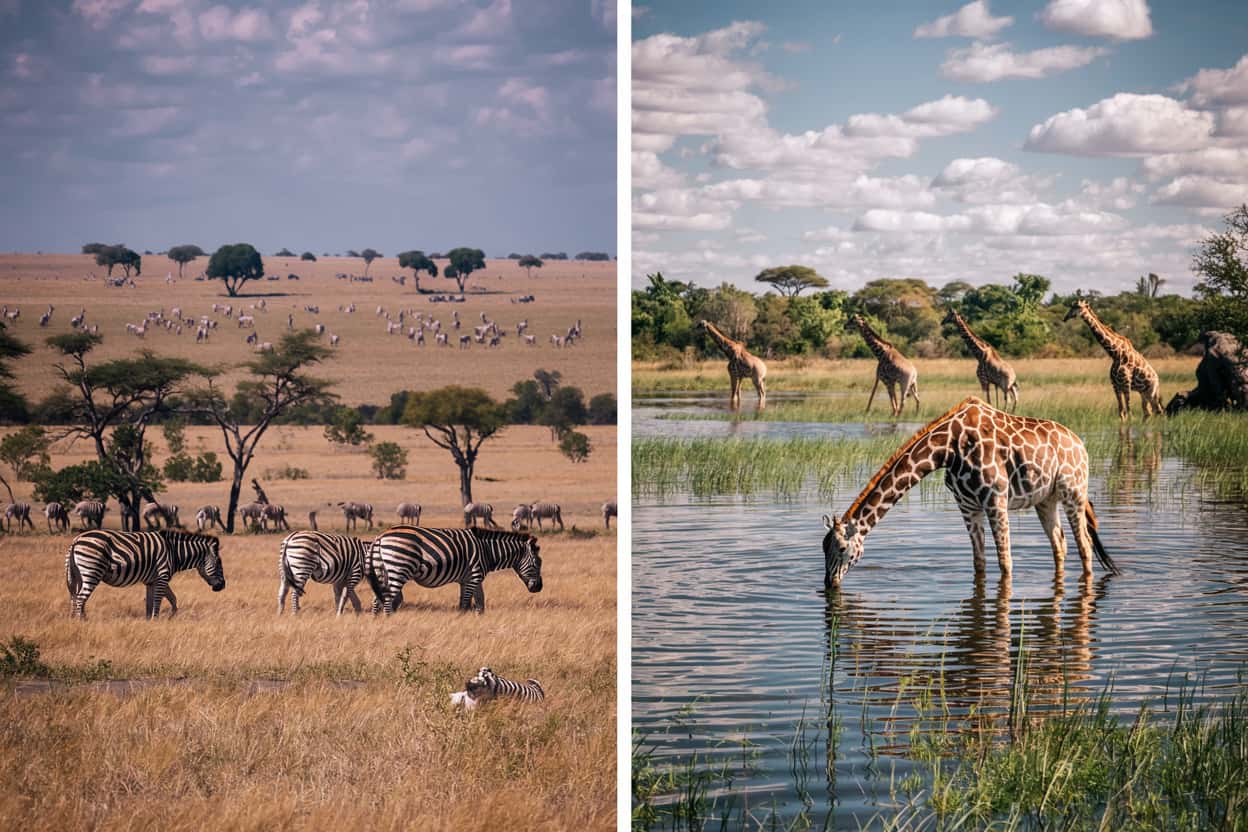
A region defines the trip
More than the lodge or the operator, the region you pick shapes nearly everything about your safari — the landscapes you'll see, the animals you're most likely to encounter, the style of vehicle you ride in, and even the rhythm of the days.
This guide compares the two great safari regions across the things that actually matter when you're choosing.
The short version
- East Africa (Kenya, Tanzania, Uganda, Rwanda) — best for sheer wildlife density, the Great Migration, gorilla trekking, and the iconic open-savanna safari.
- Southern Africa (Botswana, South Africa, Namibia, Zimbabwe, Zambia) — best for varied landscapes, walking safaris, self-drive options, malaria-free family trips, and generally better value.
- First-time safari-goer chasing the classic image? Lean East. Returning traveler, family, or honeymoon with broader interests? Lean Southern.
Side-by-side comparison
East Africa
Kenya · Tanzania · Uganda · Rwanda
- Signature parks
- Maasai Mara, Serengeti, Ngorongoro Crater, Amboseli, Bwindi.
- Landscape
- Vast, treeless plains. Open horizons, acacia trees, dramatic escarpments. The classic safari image.
- Wildlife highlight
- The Great Migration — 1.5 million wildebeest moving in a circular pattern through the Serengeti–Mara ecosystem. Mountain gorillas in Uganda and Rwanda. Tree-climbing lions.
- Game density
- Exceptional, especially during migration months. Big herds visible at distance.
- Vehicle style
- Closed 4x4 with pop-top roof. You stand to view; sides stay closed.
- Walking safaris
- Limited and tightly regulated.
- Self-drive
- Not recommended for most travelers.
- Malaria risk
- Present in most safari areas year-round.
- Typical cost
- Higher. Park fees alone in the Serengeti and Ngorongoro can exceed $200 per person per day.
Southern Africa
Botswana · South Africa · Namibia · Zimbabwe · Zambia
- Signature parks
- Okavango Delta, Chobe, Kruger, Hwange, South Luangwa, Etosha, Sossusvlei.
- Landscape
- Hugely varied — Kalahari sands, Okavango wetlands, Namib dunes, miombo woodland, fynbos coastline.
- Wildlife highlight
- Africa's largest elephant populations (Chobe, Hwange). Black and white rhino. Wild dog. Leopard. Excellent predator viewing.
- Game density
- High in core parks; more variable in wilderness areas — but the bush experience is more intimate.
- Vehicle style
- Open-sided 4x4. You sit at eye level with the bush. Mokoro (canoe) and boat safaris are common.
- Walking safaris
- A core offering. South Luangwa is the spiritual home of the walking safari.
- Self-drive
- Excellent in South Africa, Namibia, and Botswana. Well-marked roads, established camps.
- Malaria risk
- Many premium reserves are malaria-free (Madikwe, Welgevonden, parts of Eastern Cape).
- Typical cost
- More flexible. Self-drive in South Africa can be done on a modest budget; Botswana fly-in is among the most expensive safaris in Africa.
Which is right for you?
I want the classic safari image
East Africa — open plains, big herds, the Migration.
I want variety in one trip
Southern Africa — combine desert (Namibia), delta (Botswana), and falls (Zimbabwe) in two weeks.
I'm bringing kids
Southern Africa — malaria-free reserves, shorter flight times within the region, more accommodation choice.
I'm on a tight budget
South Africa self-drive (Kruger) or a Kenya group tour are the two most cost-effective ways onto safari.
I want gorillas
East Africa — Uganda (Bwindi) or Rwanda (Volcanoes National Park).
I want to walk in the bush
Southern Africa — Zambia's South Luangwa, Zimbabwe's Mana Pools.
Best time to go
| Region | Peak game viewing | Avoid |
|---|---|---|
| East Africa (Kenya / Tanzania) | July–October (Migration in Mara), January–February (calving in Serengeti) | April–May long rains |
| Southern Africa (Bots / Zim / Zam) | May–October dry season — animals concentrate at water | December–March wet season for game viewing (great for birds though) |
| Gorilla trekking (Uganda / Rwanda) | June–September, December–February (drier trails) | March–May (very wet, slippery) |
Can you combine both?
Yes, but it stretches a trip. Most travelers do best picking one region and going deeper, then returning for the other on a future visit. If you do combine, the easiest itineraries fly Nairobi → Johannesburg or Kigali → Cape Town and treat the two halves as separate trips with a shared start and end.
A two-week budget is the practical minimum for a combined trip; three weeks is more comfortable.