
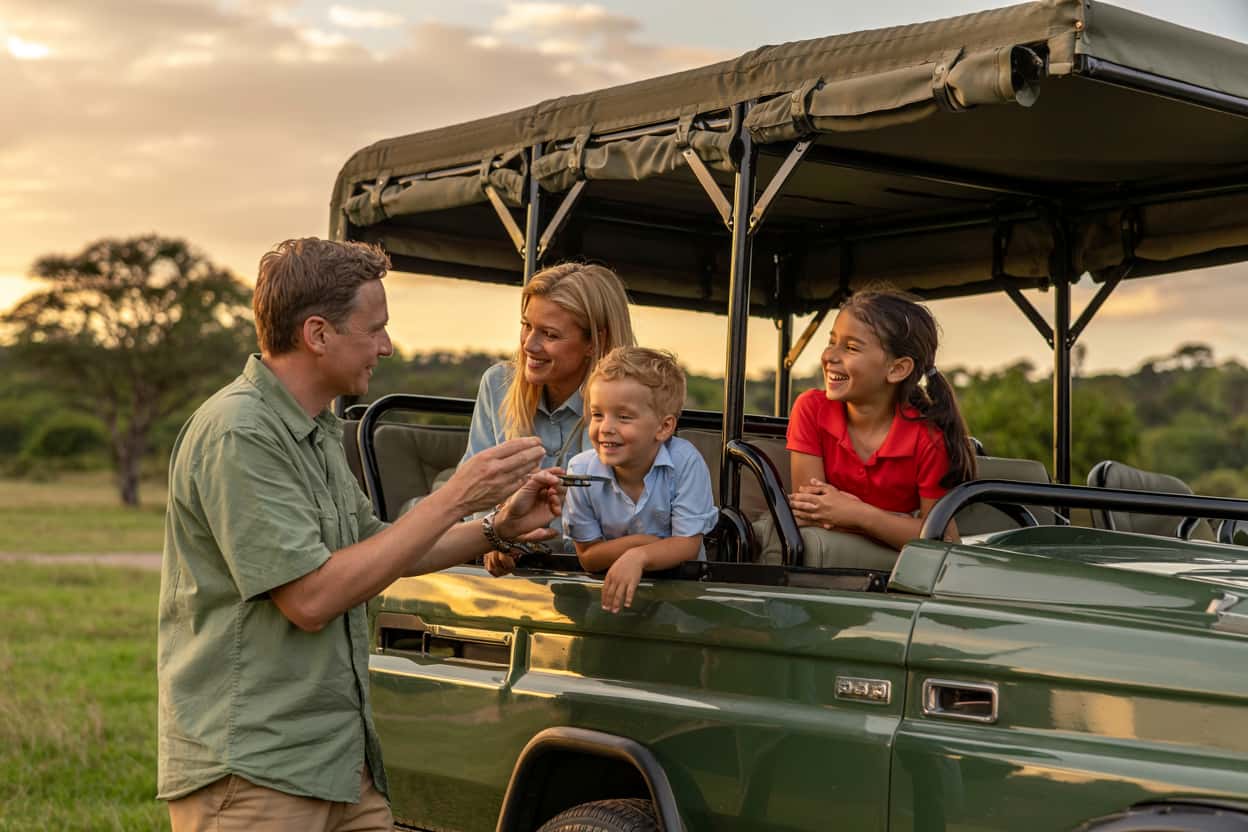
Children handle long bush days better than most parents expect. The trick is choosing accommodation and activities pitched at the right age, in a region with manageable health risks, and pacing the trip so the travel doesn't outweigh the time on safari.
This guide covers what works at each age, where to go, and the questions to ask before booking.
What works at each age
- Under 6 — short game drives only; lodges with pools, shaded areas, and structured kids' programmes
- 6–9 — the sweet spot for first safaris; full game drives if morning-only, junior ranger programmes
- 10–14 — old enough for full days, walking safaris with age limits, photography, conservation activities
- 15+ — essentially adult itineraries; canoeing, walking, longer transfers all in scope
Where to go with kids
The right region depends on the youngest traveller's age, malaria considerations, and how long the family can tolerate sitting still in a vehicle.
- South Africa private reserves (Madikwe, Welgevonden, Eastern Cape) — malaria-free, family-friendly lodges
- Sabi Sands (Kruger) — exceptional game viewing and lodges with strong children's programmes
- Kenya — Maasai Mara conservancies welcome families; cultural visits add depth
- Tanzania — northern circuit works for older children; logistics tougher for under-6s
- Botswana — generally adult-focused, though a few family camps exist
Malaria and family travel
- Malaria-free reserves exist in South Africa (Madikwe, Welgevonden, Pilanesberg, Eastern Cape)
- Children's antimalarial options are limited — discuss with a travel doctor 6+ weeks before
- If using malaria zones with children, book a lodge with sealed rooms, not open-fronted tents
- Long sleeves, repellent, and dawn-and-dusk vigilance reduce risk substantially
Keeping kids engaged
- Junior ranger programmes — many camps offer track casts, scat investigation, archery
- Age-appropriate cameras — children remember more when they have something to do
- Bush skills sessions — fire-making, tracking, knot tying
- A wildlife journal — sticker books for younger kids; sketchbooks for older ones
- Cultural visits to local schools and communities — often a highlight
Family-friendly logistics
- Direct international flights where possible — avoid two layovers with young kids
- Three nights minimum per camp — moving every two nights is exhausting
- Family villas or two-bedroom suites rather than separate rooms
- Set early dinners with the kids; parents can dine later if the lodge offers babysitting
- Mid-day downtime is essential — pool, books, naps are not wasted safari hours
Next step
Planning a multi-generational trip?
Family safaris with grandparents in tow add complexity — accessibility, pacing and accommodation all need a careful look. We can help.