
Luxury vs Budget Safaris
What you actually get at each price point — and how to spend smart at any budget.
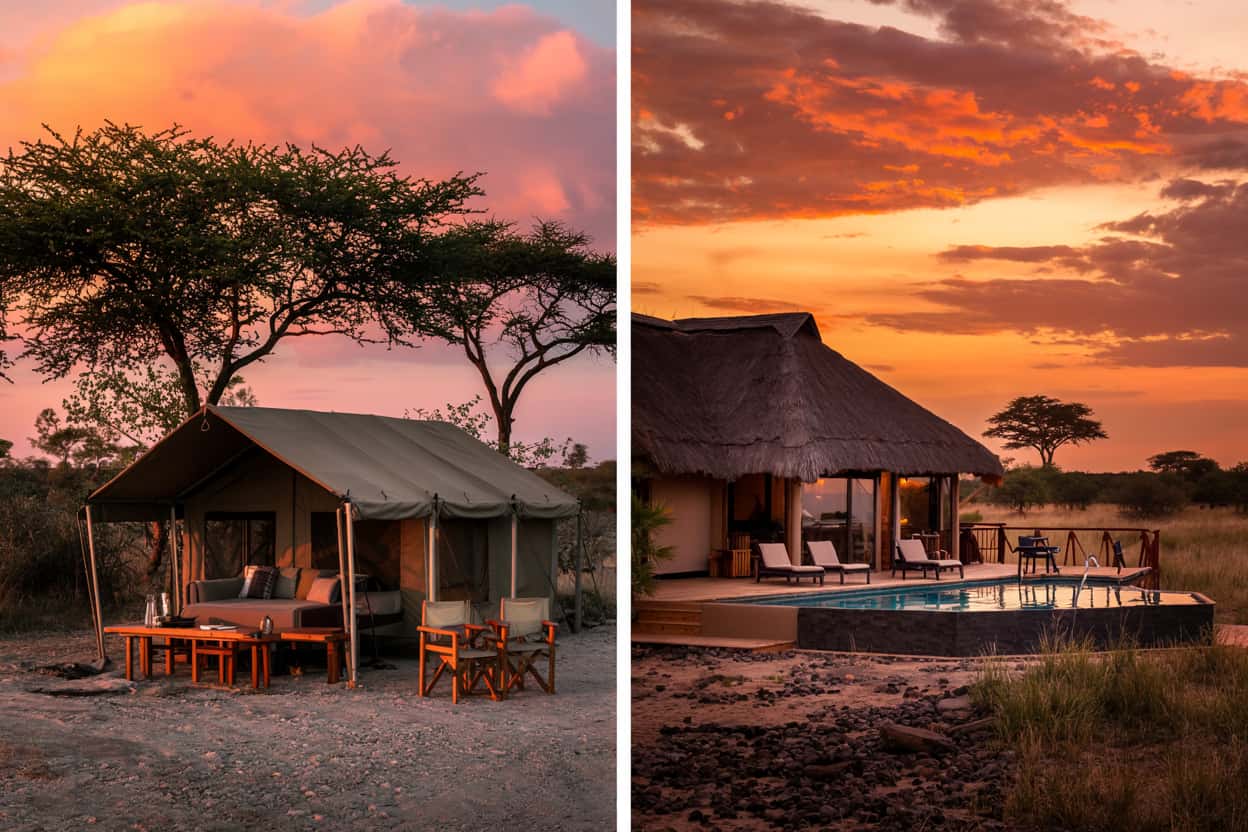
Price doesn't equal experience
The relationship between what you pay and what you see in the bush is not linear. A $400-per-night camp in Hwange or South Luangwa can deliver wildlife encounters that match anywhere on earth. A $1,800-per-night lodge gets you better linen, faster Wi-Fi and a much shorter walk to the bar.
What luxury really buys is access — to private land, to specialist guides, and to logistics that compress travel time so more of your trip is spent at game. That can be worth a lot, or very little, depending on what you actually care about.
The three tiers, honestly described
Budget
$150–$350 per person per day
Group tours, public campsites, self-drive, overland trucks.
What you get
- Shared safari vehicle, often with up to 7 fellow travelers
- Public-area camping or basic permanent tents with shared bathrooms
- Self-catering or simple buffet meals
- Limited flexibility — fixed group itinerary
- Driver-guide rather than specialist private guide
What you give up
- Privacy and flexibility on game drives
- Off-road and night drives (only available in private concessions)
- Specialist guiding, photographic vehicles, walking safaris
- Down-time space — you're back in camp with the group
Who it suits
First safari, younger travelers, large groups, anyone whose priority is "get me into the bush at all" rather than "give me the perfect bush experience".
Mid-range
$400–$800 per person per day
Tented camps, small lodges, semi-private safaris, well-known parks.
What you get
- Smaller vehicle (4–6 guests), often a window or open seat
- En-suite tents or rooms in established camps and lodges
- Full board with set menus, often a local-international hybrid
- Two game drives a day with a qualified guide
- Some flexibility on timing within the lodge's structure
What you give up
- Truly private guiding (you'll often share a vehicle)
- Access to the most exclusive private concessions
- Premium add-ons like helicopter transfers or champagne sundowners
Who it suits
The sweet spot for most travelers. You get a real safari experience — proper guides, good vehicles, comfortable nights — without paying for the marble bathtub.
Luxury
$900–$2,500+ per person per day
Private concessions, fly-in camps, premium lodges, fully bespoke trips.
What you get
- Private vehicle and guide, off-road driving, night drives, walking safaris
- Tented suites or villas with plunge pools, indoor and outdoor showers, butler service
- Excellent food and wine; chef can adapt to dietary needs
- Helicopter or charter-flight access to remote wilderness areas
- Specialist guides — photography, birding, conservation researchers
What you give up
- Cost certainty — small extras (drinks, transfers, park fees) compound quickly
- Spontaneity — peak-season camps book out 12+ months ahead
Who it suits
Returning safari-goers, special occasions, photographers and serious birders, travelers with limited time who want to compress experience into fewer days.
Where to splurge, where to save
Most travelers get the best trip by mixing tiers across a single itinerary. A typical pattern: budget for the arrival/transit nights, mid-range for the bulk of the bush time, one luxury splurge for a signature experience.
Worth paying up for
- Private guiding in a top concession. Off-road driving and walking with a senior guide changes the experience entirely.
- Fly-in to remote areas. Botswana's Okavango, Zambia's Lower Zambezi — the road alternative eats two days of your trip.
- Specialist photographic vehicles if you're serious about the camera. Dedicated bean bags, charging points, and only three guests on board.
- Gorilla trekking permits. No way around the cost — but pair them with comfortable lodging since trekking days are exhausting.
Don't over-pay for
- City nights. Nairobi or Johannesburg airport hotels — book the cheapest reasonable option. You'll be there for nine hours.
- The first and last bush night. Travel days; you won't use the lodge's amenities.
- Big-name parks during peak. A premium lodge inside the Mara during Migration costs more than a private conservancy next door — with worse off-road rules.
- "Brand" lodges. A few well-marketed groups charge a premium that doesn't reflect a better experience. Compare per-camp on independent reviews.
Practical ways to maximise value at any budget
- Travel just outside peak. June and November in Southern Africa offer near-peak game viewing at 30–40% off shoulder rates.
- Stay longer in fewer places. Three nights minimum at each camp. Two-night stays burn half a day in transfers and you never settle in.
- Use private conservancies bordering big parks. Same wildlife, far fewer vehicles, and the rules allow off-road driving and night drives that the national parks don't.
- Book through a specialist agent. Good agents have rates you can't access directly and know which lodges are over- or under-priced this season.
- Self-drive where it works. South Africa's Kruger and Namibia's Etosha are world-class parks where a self-drive trip costs a fraction of a guided fly-in.
Need help matching budget to experience?
Tell us your budget, dates, and what matters most. We'll point you at operators we'd send our friends to, who deliver real value at your price point — no paid placement, ever.
Contact our planners