
Ghana Safari Seasonal Guide
Discover the best times to visit Ghana's national parks and experience its diverse wildlife and cultural heritage.
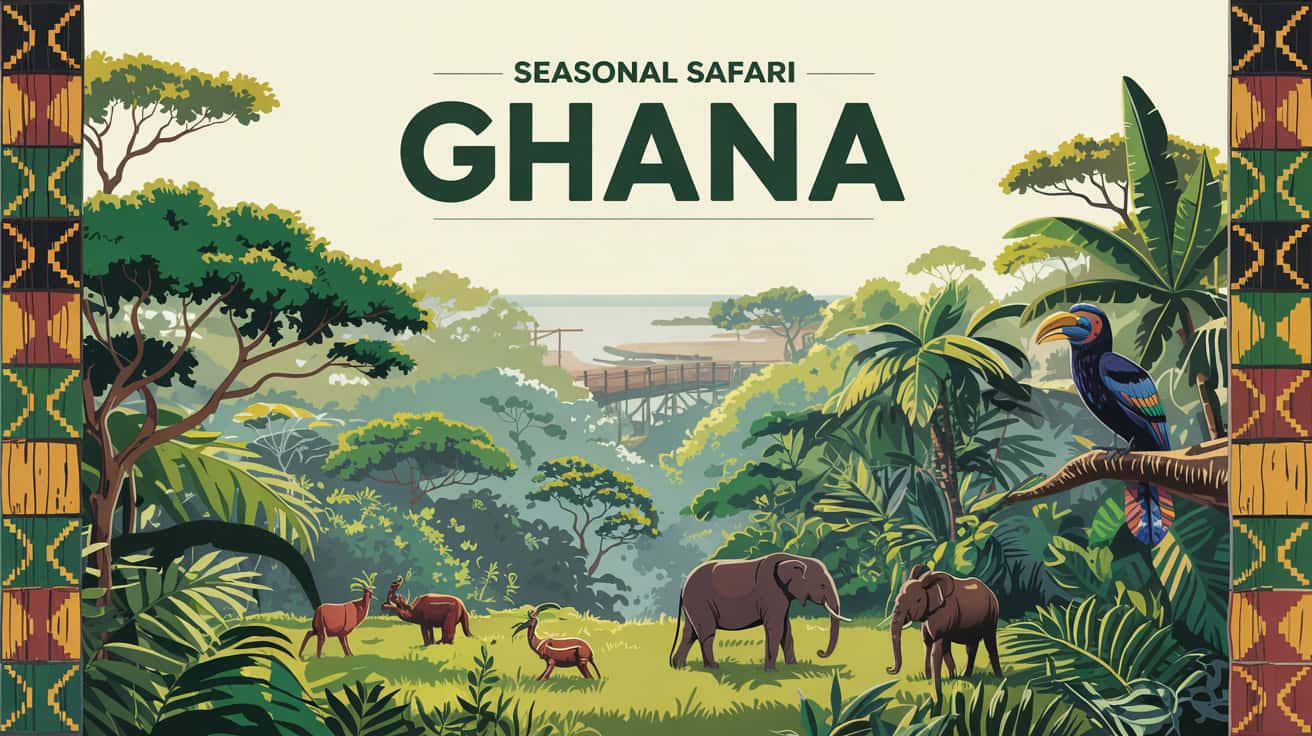
Uncovering Ghana's Natural Wonders
From the savanna elephants of Mole National Park to the rainforests of Kakum, Ghana offers diverse wildlife experiences throughout the year.
Ghana's Safari Seasons
Ghana has a tropical climate with two distinct wet seasons in the south and one wet season in the north. Understanding these patterns is key to planning the perfect safari experience. The country's diverse ecosystems include savannas, rainforests, coastal wetlands, and mountains, each with its own optimal visiting time.
Dry Season (November-March)
The dry season is generally considered the best time for wildlife viewing in Ghana. With less vegetation and animals gathering around limited water sources, spotting wildlife becomes easier, especially in the northern regions like Mole National Park.
- Peak wildlife viewing in Mole National Park
- Comfortable temperatures and low humidity
- Clear skies ideal for photography
- December-January brings harmattan winds with dusty conditions
Wet Season (April-October)
The wet season brings lush landscapes and fewer tourists. While some roads may become difficult to navigate, this season offers unique advantages for birdwatching and experiencing Ghana's vibrant green landscapes.
- Excellent birdwatching with migratory species present
- Lush green landscapes and flowing waterfalls
- Fewer tourists and potential for discounted accommodations
- Some roads become difficult to navigate, especially to remote areas
Month-by-Month Guide
January-February
March-April
May-June
July-August
September-October
November-December
Key Safari Regions & Best Times
Mole National Park
Ghana's largest wildlife sanctuary features savanna elephants, various antelope species, primates, and over 300 bird species.
Best time: November to April for optimal wildlife viewing.
Highlights: Walking safaris with rangers, elephant sightings at waterholes, Mole Motel viewpoint.
Avoid: July-September when roads can be difficult.


Kakum National Park
Tropical rainforest reserve featuring a famous canopy walkway offering unique perspectives of the forest ecosystem.
Best time: October to March for drier conditions, December-February for highest wildlife activity.
Highlights: Canopy walkway, forest elephants (rare), diverse primates, exceptional birdlife.
Avoid: May-June during heaviest rains.
Bia National Park
A UNESCO Biosphere Reserve featuring pristine rainforest habitat with endangered species.
Best time: November to February for drier conditions and better wildlife visibility.
Highlights: Forest elephants, bongo antelopes, yellow-backed duikers, rich butterfly populations.
Avoid: May-July when trails become muddy and difficult.

Practical Considerations
What to Pack
- Dry Season: Lightweight clothing, sun protection, dust mask for harmattan period, insect repellent.
- Wet Season: Quick-dry clothing, rain jacket, waterproof bags, sturdy footwear with good traction.
- Year-round: Neutral-colored clothing for safaris, binoculars, camera gear with protection.
Health Considerations
- Malaria: Present year-round, but higher risk during rainy seasons. Take appropriate prophylaxis.
- Vaccinations: Yellow fever vaccination is mandatory. Consider hepatitis A, typhoid, and other travel vaccines.
- Heat: Temperatures can be extreme, especially in the north during dry season. Stay hydrated.
Combining Ghana with Other Destinations
Ghana pairs well with other West African destinations for a comprehensive West African safari experience:
- Ghana + Togo + Benin: Perfect cultural circuit combining wildlife with West African heritage sites.
- Ghana + Senegal: Combine Ghana's forests with Senegal's Niokolo-Koba National Park during Nov-May.
- Ghana + Ivory Coast: Visit Taï National Park in Ivory Coast and Mole National Park in Ghana during dry season.
Ready to Plan Your Ghana Safari?
Let our local experts help you design the perfect Ghana safari itinerary based on your interests and the optimal season for your preferred activities. Whether you're interested in wildlife viewing, birdwatching, or cultural experiences, we'll create a customized journey.