
Great Migration Seasonal Guide
Month-by-month tracking of the Great Migration through Tanzania and Kenya, with the best viewing locations and expert tips.
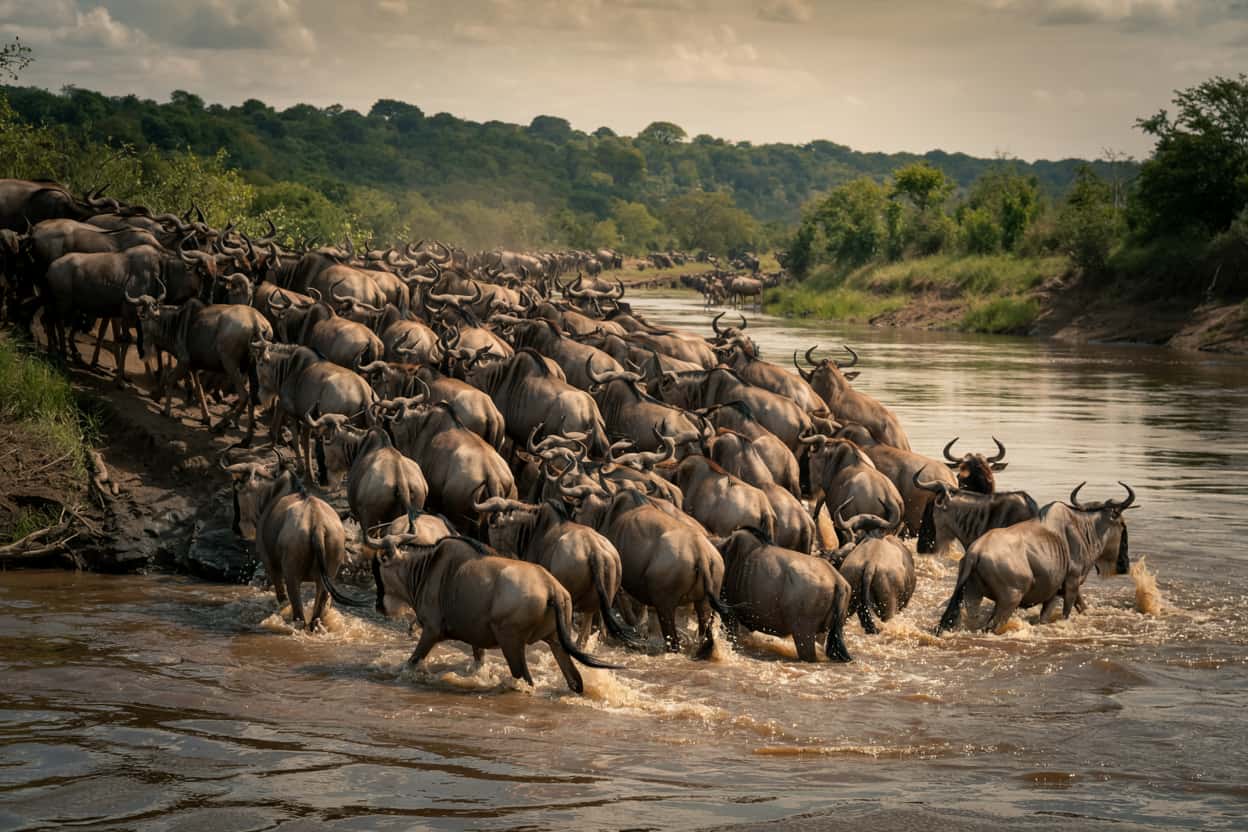
Nature's Greatest Wildlife Spectacle
Over 1.5 million wildebeest, 200,000 zebras, and 350,000 gazelles embark on an epic journey across the Serengeti-Mara ecosystem every year in search of fresh grazing and water.
Understanding the Great Migration
The Great Migration is not a single event but a year-round movement of vast herds of wildebeest, zebra, and gazelles in a clockwise circuit across the Serengeti-Mara ecosystem, spanning Tanzania and Kenya. Driven by rainfall patterns and the resulting fresh grazing, these animals travel up to 1,000 km annually, facing predators, treacherous river crossings, and harsh landscapes.
While the migration follows a general pattern, the exact timing can vary each year depending on rainfall. The information below provides a typical timeline, but flexibility in your safari planning is essential for witnessing this spectacular phenomenon.
Key Migration Events
- Calving Season (January-March):
Over 400,000 wildebeest calves are born in a synchronized birthing event in the southern Serengeti and Ndutu area.
- Northward Migration (April-June):
Herds begin moving north and west through the central and western Serengeti, following the rainfall.
- Mara River Crossings (July-October):
The most dramatic part of the migration, as herds cross the crocodile-infested Mara River to reach the Masai Mara.
- Southward Return (November-December):
Herds move south again through eastern Serengeti towards the southern plains to begin the cycle anew.
Month-by-Month Migration Guide

Southern Serengeti & Ndutu Area (Tanzania)
Peak of calving season. Up to 8,000 wildebeest are born each day during a two-to-three-week period.
Book well in advance as this is a popular period. Lake Ndutu area offers the best viewing opportunities.

Southern Serengeti & Ndutu Area (Tanzania)
Calving continues. Herds remain concentrated in the nutrient-rich plains of the southern Serengeti.
Mobile tented camps in the Ndutu area provide the best access to the herds. Great for photography.

Southern to Central Serengeti (Tanzania)
End of calving season. Herds begin to move northwards as short grass plains dry out.
Consider lodges in both southern and central Serengeti for flexibility. Excellent photography with dramatic skies.

Central Serengeti (Tanzania)
Migration in transition. Herds continue moving northward into central Serengeti.
Low season with fewer tourists and good value. Some rain may occur but typically won't impact viewing.

Central to Western Serengeti (Tanzania)
Herds concentrate in the central and western corridors of Serengeti. Mating season begins.
Excellent value month. Fewer tourists despite excellent wildlife viewing. Western Serengeti camps offer best access.

Western Serengeti & Northern Serengeti (Tanzania)
Herds begin moving towards the northern Serengeti. Some early crossings of the Grumeti River.
Book northern or western Serengeti camps. Balloon safaris offer spectacular views of the moving herds.

Northern Serengeti (Tanzania) & Masai Mara (Kenya)
Early Mara River crossings begin. Herds arrive at the Kenya border and begin crossing into the Masai Mara.
Northern Serengeti offers more exclusive viewing than the busier Masai Mara. Kogatende area is excellent.

Northern Serengeti (Tanzania) & Masai Mara (Kenya)
Peak river crossing period. Multiple crossings at different points along the Mara River.
Prime time but very busy. Book at least a year in advance. Consider splitting time between northern Serengeti and Masai Mara.

Masai Mara (Kenya) & Northern Serengeti (Tanzania)
Herds spread across the Mara. Continuous movement and river crossings as animals search for fresh grazing.
Consider private conservancies around the Masai Mara for exclusive viewing away from crowds.

Masai Mara (Kenya) & Northern Serengeti (Tanzania)
Herds begin moving southward as they respond to rainfall patterns. Some river crossings as they return to Tanzania.
Northern Serengeti is less crowded than the Mara now, offering excellent value and good viewing.

Northern to Eastern Serengeti (Tanzania)
Herds continue moving south through eastern Serengeti, following the short rains.
Consider central Serengeti lodges as herds move through. Short rains create beautiful green landscapes.

Eastern to Southern Serengeti (Tanzania)
Herds arrive back in the southern plains of Serengeti, completing the annual cycle.
Southern Serengeti and Ndutu areas offer excellent viewing as herds gather before calving season.
Great Migration Route Map

The Great Migration follows a clockwise route through the Serengeti-Mara ecosystem, driven by rainfall patterns and the search for fresh grazing.
Migration Viewing Tips
Best Viewing Practices
- Plan Ahead: Book 12-18 months in advance for peak season (July-October) and at least 6 months for other times.
- Stay Flexible: Consider a mobile tented camp that follows the migration or split your stay between two locations.
- Allow Time: River crossings are unpredictable. Plan at least 3-4 days in an area to maximize chances of seeing a crossing.
- Private Vehicles: Consider booking a private safari vehicle for maximum flexibility to wait for river crossings.
Photography Tips
- Equipment: Bring a versatile zoom lens (70-300mm minimum) and a wide-angle lens for landscape shots of massive herds.
- Dust Protection: Invest in good protection for your gear. Dust is prevalent, especially during dry season crossings.
- Timing: Early morning and late afternoon light provides the best conditions for dramatic migration shots.
- Patience: For river crossings, be prepared to wait. Setup your camera settings in advance to be ready when action starts.
Responsible Viewing
The Great Migration is a natural phenomenon that depends on the preservation of the ecosystem and wildlife corridors. Here's how to view it responsibly:
- Choose Ethical Operators: Select safari companies that follow responsible wildlife viewing guidelines and support conservation.
- Maintain Distance: Don't crowd animals at river crossings or pressure guides to get too close. This can disrupt natural behavior.
- Support Conservation: Consider adding a conservation experience or donation to your safari to support the ecosystem.
- Stay on Designated Roads: Especially in the Masai Mara where off-roading is prohibited in the main reserve.
Where to Stay
Choosing the right accommodation in the right location is crucial for maximizing your migration experience. Here are our top recommendations for each phase of the migration:
Calving Season (January-March)
- Mobile Tented Camps in Ndutu:
Seasonal camps that position themselves in the heart of the action. These move with the migration and provide an authentic safari experience.
- Southern Serengeti Lodges:
Permanent lodges in the southern Serengeti offer more amenities while still providing good access to the calving grounds.
Western & Northern Serengeti (May-July)
- Western Corridor Camps:
Camps around the Grumeti River offer excellent viewing of the herds as they move through the Western Corridor.
- Northern Serengeti Mobile Camps:
Seasonal camps in the Kogatende area provide front-row seats to Mara River crossings on the Tanzanian side.
Masai Mara (August-October)
- Mara River Camps:
Camps located near the Mara River offer the best opportunities to witness river crossings. Look for options in the Mara Triangle.
- Private Conservancies:
Camps in the private conservancies surrounding the Masai Mara offer more exclusive experiences away from the crowds.
Plan Your Great Migration Safari
Let our experienced safari specialists help you design the perfect Great Migration safari based on your travel dates, preferences, and budget. With expert guidance, we'll ensure you're in the right place at the right time to witness nature's greatest wildlife spectacle.