
Morocco Safari Seasonal Guide
Discover the optimal times to explore Morocco's diverse landscapes, from the Sahara Desert to the Atlas Mountains and coastal regions.
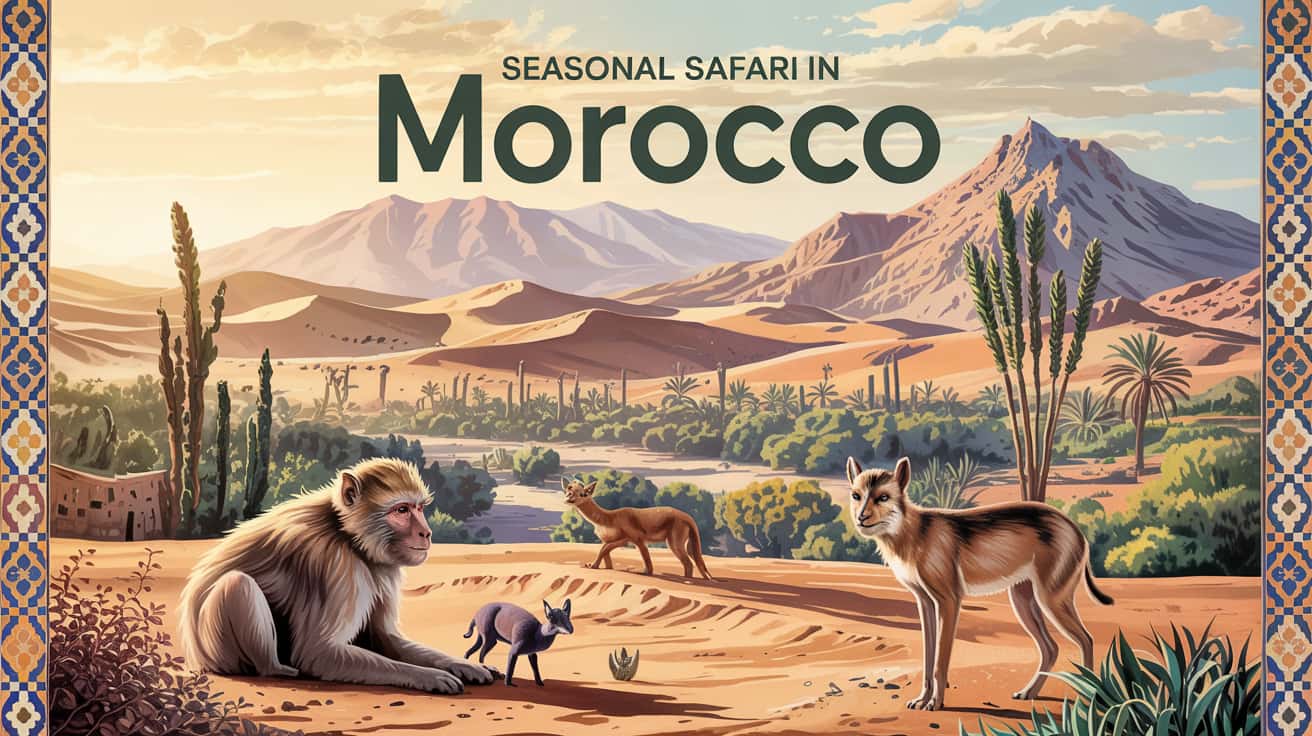
Morocco's Diverse Safari Experiences
From the golden dunes of the Sahara to the rugged Atlas Mountains and rich coastal ecosystems, Morocco offers extraordinary natural diversity.
Morocco's Climate & Safari Seasons
Morocco's geographical diversity creates distinct microclimates across its regions. From the Mediterranean north to the Sahara in the south, and from coastal plains to high mountains, each area has its optimal visiting times for wildlife viewing and outdoor activities.
Spring (March-May) & Fall (September-November)
These shoulder seasons offer the most pleasant temperatures across all regions of Morocco. They're ideal for combined itineraries that include desert, mountains, and coastal areas.
- Comfortable temperatures in all regions (15-28°C/59-82°F)
- Spring wildflowers in Atlas Mountains (March-May)
- Bird migrations in coastal areas and wetlands
- Less crowded than peak winter season
Winter (December-February) & Summer (June-August)
These seasons are more region-specific. Winter is ideal for desert experiences but can be cold in the mountains. Summer is best avoided in the desert but is perfect for coastal and high mountain activities.
- Winter: Perfect for Sahara (15-20°C/59-68°F days), but cold in Atlas Mountains
- Winter: Peak tourism season with higher prices
- Summer: Extreme heat in desert regions (40°C+/104°F+)
- Summer: Ideal for coastal nature reserves and high Atlas trekking
Month-by-Month Guide
December-February
March-April
May
June-August
September-October
November
Key Safari Regions & Best Times
Sahara Desert Experiences
Morocco's portion of the Sahara offers spectacular dune landscapes and unique desert-adapted wildlife, including several rare species.
Best time: October to April, with November-February offering ideal daytime temperatures.
Highlights: Fennec foxes, desert hedgehogs, gazelles, gerbils, cape hares, numerous reptiles, and unique desert flora.
Avoid: June to August when daytime temperatures regularly exceed 45°C (113°F).


Atlas Mountain Ecosystems
The Atlas Mountains harbor diverse ecosystems and wildlife, from forested foothills to high alpine zones with specialized fauna and flora.
Best time: April to June for spring flowers and wildlife, and September to October for pleasant hiking conditions.
Highlights: Barbary macaques, Barbary sheep (aoudad), Atlas Mountain gazelles, golden eagles, various reptiles and amphibians.
Avoid: December to February in higher elevations due to snow and difficult conditions.
Coastal and Wetland Reserves
Morocco's coastal areas and wetlands, including Souss-Massa National Park and Merja Zerga, are vital for resident and migratory birds.
Best time: September to April for migratory bird species, with peak diversity from November to March.
Highlights: Northern bald ibis (critically endangered), flamingos, marbled teal, white-headed duck, and hundreds of migratory species.
Avoid: No major season to avoid, though summer (June-August) has fewer migratory species.

Special Wildlife Experiences
Morocco offers several unique wildlife experiences that are highly seasonal. Planning your visit around these natural events can make your safari truly exceptional.
Northern Bald Ibis Viewing
The critically endangered Northern Bald Ibis has one of its last wild breeding populations in Morocco. Viewing these rare birds requires careful timing and local expertise.
- Best time: February to April to observe breeding behaviors at coastal cliffs near Souss-Massa National Park.
- Viewing notes: Always view with official guides to protect these critically endangered birds.

Atlas Mountains Spring Bloom

The Atlas Mountains transform during spring when snow melt nurtures a spectacular bloom of wildflowers, attracting numerous pollinators and creating ideal wildlife viewing conditions.
- Best time: April to early June, with peak bloom varying by elevation (earlier at lower altitudes).
- Wildlife benefits: Excellent time for observing butterflies, birds, and mammals that become more active during this abundant season.
Desert Wildlife After Rainfall
Occasional rainfall in desert regions creates brief but extraordinary transformations in the ecosystem. Desert blooms can occur, and wildlife activity increases dramatically.
- Best time: Unpredictable, but most common from November to March when occasional rains may occur.
- Experience notes: Not guaranteed in any given year, but local guides can advise on recent rainfall and conditions.

Practical Considerations
What to Pack
- Desert Safaris: Lightweight, breathable clothing, sun protection, warm layers for evenings, headlamp, binoculars.
- Mountain Safaris: Layers for variable temperatures, hiking boots, rain jacket (spring), sun protection.
- Coastal Reserves: Wind protection, binoculars (essential for birdwatching), field guides, waterproof footwear for wetlands.
Cultural Considerations
- Ramadan: Consider the timing of Ramadan (dates vary yearly) as it may affect services in rural areas.
- Rural Communities: Respect local customs when visiting rural areas near wildlife reserves, particularly regarding dress code and photography.
- Conservation Awareness: Support guides who demonstrate knowledge and respect for both wildlife and local cultures.
Combining Wildlife Viewing with Cultural Experiences
Morocco offers exceptional opportunities to combine wildlife safaris with rich cultural experiences:
- Berber Cultural Experiences + Atlas Wildlife: Best in spring and fall when weather is ideal for both mountain communities and wildlife viewing.
- Desert Nomadic Traditions + Sahara Wildlife: Winter months (Dec-Feb) offer comfortable temperatures for combined cultural and wildlife experiences.
- Coastal Cities + Bird Reserves: Winter months provide excellent opportunities to combine historical coastal cities with peak birdwatching.
Ready to Explore Morocco's Natural Wonders?
Let our experienced local guides help you design the perfect Moroccan safari based on your interests and travel dates. Whether you're drawn to the Sahara's golden dunes, the Atlas Mountains' biodiversity, or the coastal wetlands' incredible birdlife, we'll create a journey that showcases Morocco's natural treasures at their best.