
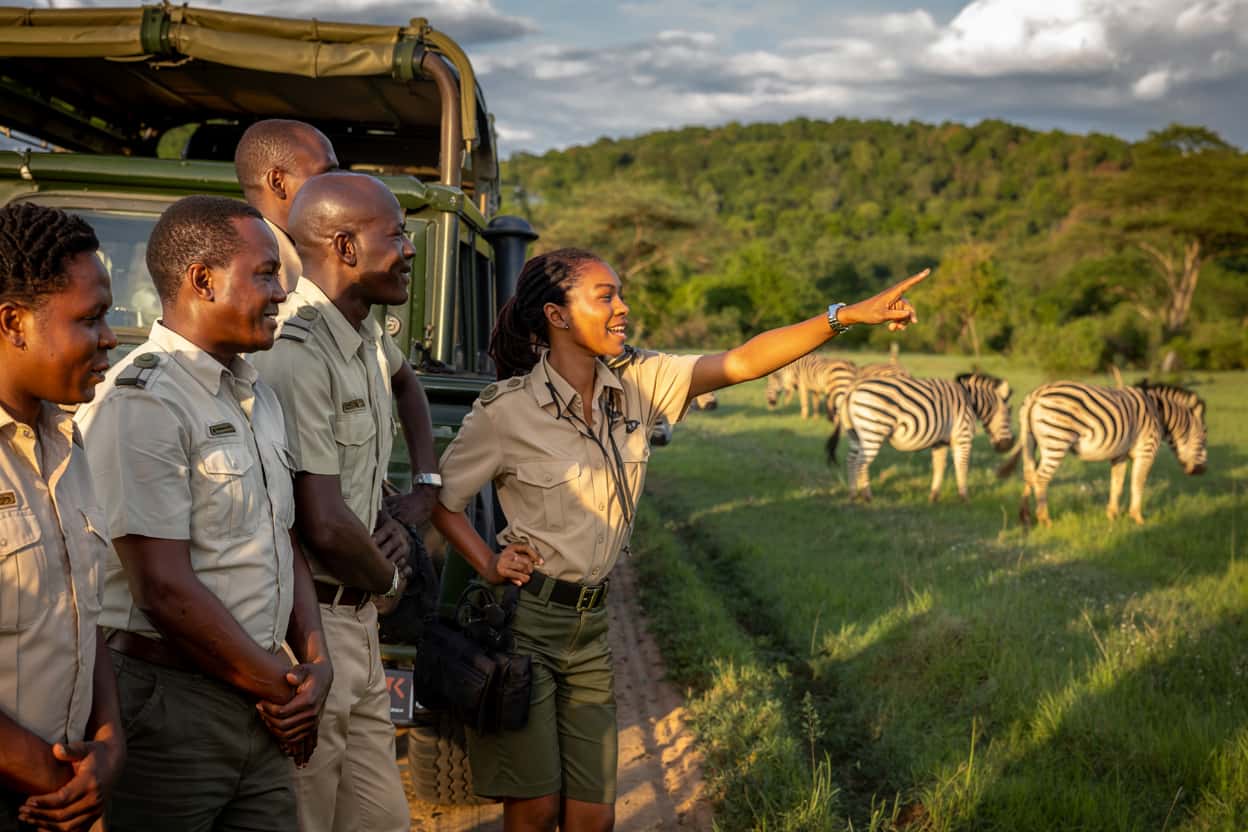
For most of the last century, African conservation worked on a fortress model — fences, parks, exclusion. That model produced spectacular wildlife pockets but left local people excluded, hostile or actively poaching. Community-based conservation flips the equation: communities own or co-manage land, earn directly from wildlife, and decide what survives.
Where the model has been given time and resources, it has been transformative.
What a community conservancy is
A defined area of community-owned or community-managed land, governed by an elected committee, with the right to lease portions to tourism operators in exchange for revenue, employment and infrastructure. Wildlife use is regulated by the community itself within national laws.
- Land remains under local ownership — usually communal or trust-held
- Revenue from tourism leases flows back via a transparent benefit-sharing formula
- Decisions about land use, grazing and wildlife are taken locally
- External NGOs typically support but do not run the conservancy
Where it's working
- Namibia — 86 registered communal conservancies covering ~20% of the country; black rhino population trebled in two decades
- Maasai Mara conservancies (Kenya) — Mara Naboisho, Olare Motorogi, Naboisho and others — vehicles capped, livestock and wildlife coexist
- Northern Kenya — Northern Rangelands Trust supports ~40 community conservancies across pastoralist regions
- Botswana — community trusts manage Chobe Enclave, NG/CT zones, with tourism leases as primary income
- Ngorongoro Conservation Area Authority — co-management between Maasai pastoralists and the wildlife authority (politically complex)
What goes well — and what doesn't
- Goes well: wildlife recovery on community land, dramatic poaching reduction, broader political support for conservation
- Goes well: education and healthcare investment funded by tourism leases
- Hard: equitable distribution of benefits within communities — elite capture is a real risk
- Hard: tourism downturns (COVID, instability) collapse the funding model overnight
- Hard: scaling beyond charismatic mega-fauna areas where tourism doesn't pay
How to choose conservancy-supporting trips
- Stay in conservancy lodges, not just the headline national parks
- Ask whether your bed levy is publicly disclosed and where it goes
- Choose operators that employ from the host community, with transparent training programmes
- Read independent assessments — Long Run, Fair Trade Tourism, B Corp accreditations are signals not guarantees