
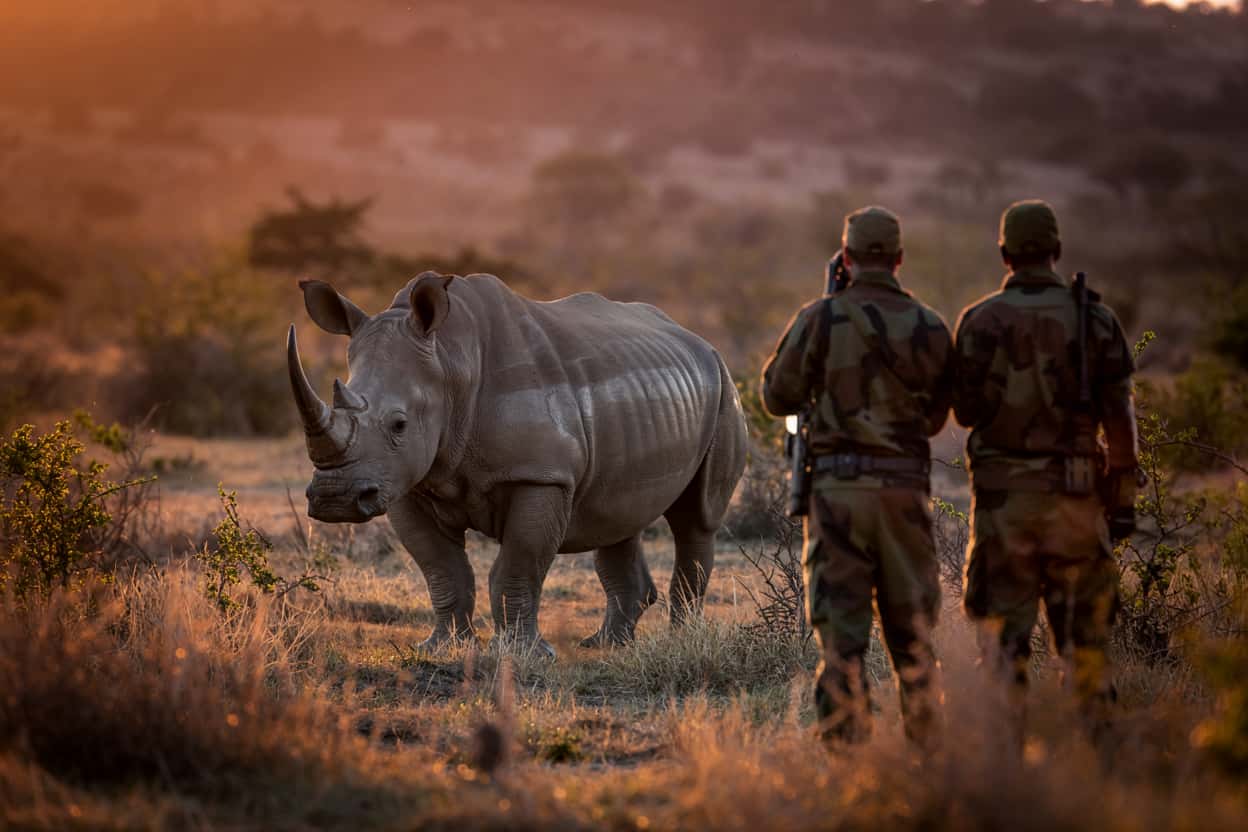
Headlines focus on a handful of charismatic species. The reality is broader and more uneven: some species (mountain gorilla, black rhino) have rebounded against the odds; others (vultures, pangolins) are sliding toward functional extinction with relatively little public attention.
This guide gives an honest snapshot of where the major species stand.
Recovering — but fragile
- Mountain gorilla — population trebled to 1,000+; the most successful African mammal recovery story
- Black rhino — South African population stabilised after the 2014 crisis; Kenya and Namibia growing
- White rhino — population still in decline overall; intensive protection in fewer reserves
- African elephant (Southern populations) — stable or growing in most of Botswana, Zimbabwe, parts of South Africa
Declining — significant concern
- African forest elephant — listed as Critically Endangered; declined ~60% in 50 years
- African wild dog — fewer than 6,000 individuals; range fragmentation severe
- Cheetah — populations down to ~7,000; very low genetic diversity, conflict with farmers
- Lion — populations halved over 25 years; healthy in core conservancies but declining outside
- Grey crowned crane — wetland loss and chick collection have driven steep declines
Critical — under-attention
- Pangolin (all four African species) — most-trafficked mammal in the world; Critically Endangered
- Hooded vulture and white-backed vulture — populations down 80%+ from poisoning
- Northern white rhino — functionally extinct (two females remaining); IVF efforts underway
- Saharan cheetah — fewer than 250 left across the entire Sahel
- Ethiopian wolf — fewer than 500; canine distemper and habitat fragmentation
What's working
- Translocation and reintroduction — Akagera (Rwanda) lions, Mozambique elephants, Malawi rhinos all by air
- Sniffer-dog detection at airports interdicting wildlife crime shipments
- CITES enforcement and tougher national legislation in several range states
- Community-conservancy models that make wildlife economically valuable to local people
- Captive breeding for the most extreme cases (northern white rhino, gharial parallels)
How travelers help
- Choose itineraries that include species in recovery — your park fee directly funds the work
- Visit lesser-visited reserves with high conservation value but lower tourism revenue
- Donate to specialist organisations (Save the Rhino, Pangolin Conservation Network, Vulpro, Painted Dog Conservation)
- Refuse any wildlife product, anywhere — legal or not, ancient or new