
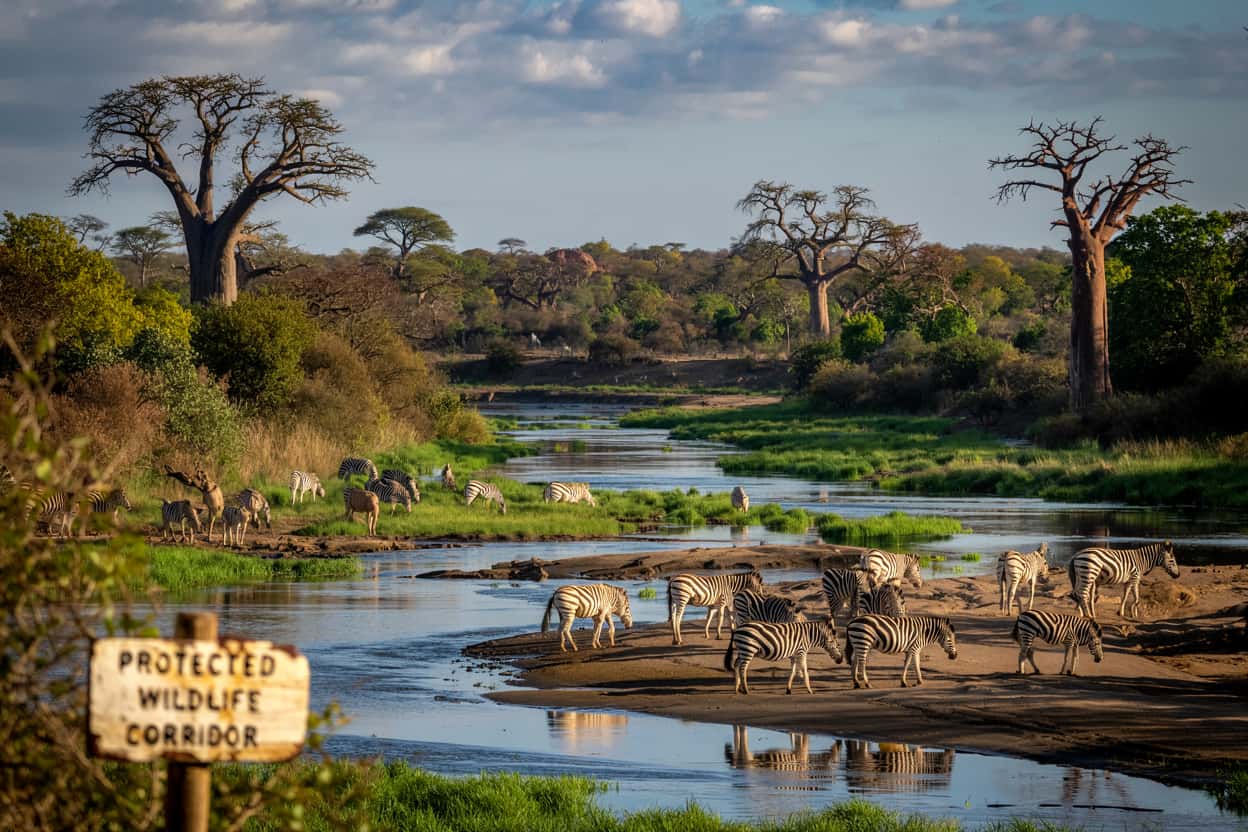
Anti-poaching protects what's already there. Habitat preservation — and where possible, restoration — is what allows wildlife to thrive across larger landscapes than any one fenced reserve can sustain. The single biggest predictor of long-term species health is connected, well-managed habitat.
Africa's major ecosystems and what's at stake
- Savanna grasslands — the iconic safari biome; threatened by agricultural conversion and bush encroachment
- Miombo woodland — vast, under-recognised, providing carbon storage and crucial corridor habitat
- Tropical rainforest (Congo Basin) — second-largest on Earth; logging and shifting agriculture pressure
- Coastal mangroves — disappearing fast; critical for fish, carbon and storm protection
- Inland wetlands (Okavango, Bangweulu, Sudd) — underpin entire wildlife economies
- Montane forest (Albertine Rift, Eastern Arc) — ancient, biodiverse and tiny
- Sahel and Sahara — desertification, but also vital habitat for rare species
Primary threats
- Agricultural expansion — particularly soybean, palm oil and cattle in former wilderness
- Settlement growth and infrastructure — roads, pipelines, railways fragmenting corridors
- Charcoal and timber harvesting — often illegal, hard to police
- Climate change — shifting rainfall, fire regimes and vegetation belts
- Invasive species — water hyacinth, opuntia cactus, prosopis
- Mining concessions in or adjacent to protected areas
Big-picture habitat initiatives
- KAZA — the Kavango–Zambezi Transfrontier Conservation Area, world's largest at 520,000km², spanning five countries
- Great Limpopo Transfrontier Park — Mozambique, South Africa, Zimbabwe
- Northern Rangelands Trust corridors — Kenya, connecting Samburu, Lewa, Sera, Sarara
- African Parks' restoration of ecosystems in Akagera, Liwonde, Zakouma, Pendjari
- Marine protected area expansion in Gabon, Madagascar and the Seychelles
Restoration vs preservation
Restoration is harder, slower and more expensive than preventing damage in the first place — but where ecosystems have been lost, it's increasingly necessary. Notable success stories include Akagera in Rwanda (post-genocide) and Gorongosa in Mozambique (post-civil-war), both rebuilt nearly from zero.
- Reforestation — most effective when species and provenance match local ecology
- Wildlife reintroduction following habitat readiness, not the reverse
- Invasive-species removal — slow, labour-intensive, persistent
- Fire management — both fire reintroduction and fire suppression depending on biome
How travelers help
- Visit lesser-known reserves and corridors — your park fees fund habitat work
- Choose lodges in private reserves and conservancies — these are often the corridor land itself
- Support transfrontier conservation NGOs (Peace Parks Foundation, AWF)
- Buy local-source food and crafts — agricultural conversion is partly a market problem
- Carbon offsetting via accredited African forest and wetland projects