
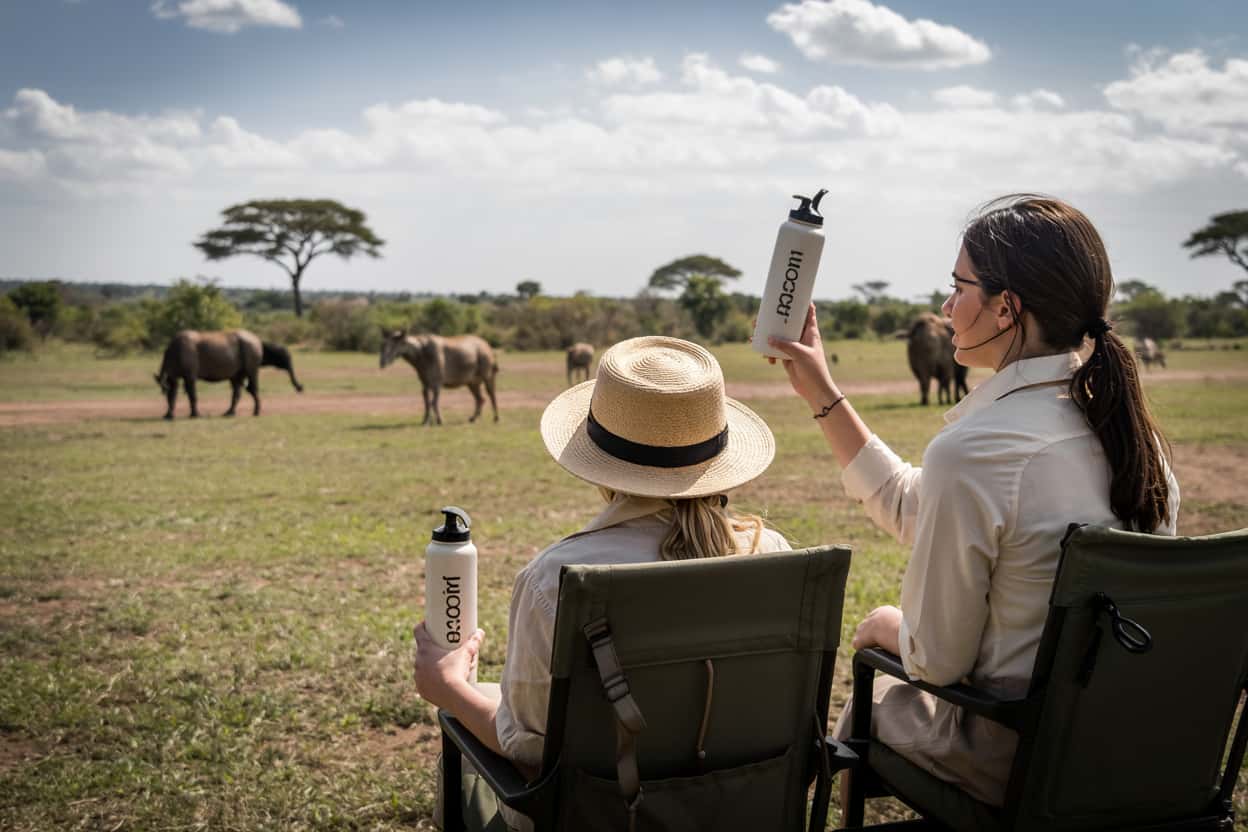
Most travelers want to do the right thing. The problem is that "the right thing" on safari is unfamiliar — different from a city break, different from a beach holiday, and different from how social-media wildlife content is often presented. This guide is the short, practical version.
At a wildlife sighting
- Stay in the vehicle unless your guide explicitly says otherwise — your safety depends on it
- Speak quietly. Animals tolerate the rumble of an engine far better than human voices
- No flash photography on game drives — particularly with predators and at night
- Let the guide position the vehicle. Stop asking to get closer; trust the framing
- If multiple vehicles are at a sighting, leave when the others are still arriving — share the space
- Never throw food or anything else from the vehicle
On foot
- Single file behind the lead guide; never overtake
- Wear muted colours; no perfume or scented sunscreen
- Follow hand signals — if the guide stops, you stop
- If you encounter dangerous game, stay still and silent. Do not run
- Pack out everything you bring in, including biodegradable waste
At camps and lodges
- Refill water bottles rather than buying plastic
- Reuse towels and linen — most camps now ask you to flag if you want them changed
- Conserve water and electricity; many camps run on solar with limited capacity
- Don't leave food in your tent or on the deck — it attracts wildlife and creates conflict
- Lock and zip your tent before leaving for game drives
Tipping
- Tip in USD where possible; small clean bills
- Guides directly: $15–$25 per guest per day
- Trackers: $10–$15 per guest per day
- General staff envelope: $10–$15 per guest per day, distributed by the lodge
- Tip on the last morning, in person where you can
Cultural visits
- Ask before photographing people; respect a 'no'
- Don't hand out sweets or pens to children — funnel through schools or community programmes instead
- Buy crafts directly from makers at fair prices; don't haggle aggressively for the experience
- Treat villages and homes as you'd want yours to be treated
- Listen more than you ask, and ask better questions when you do
Online afterwards
- Don't geotag specific sightings of high-value species (rhinos especially) — poachers monitor social media
- Avoid posting images that imply close human-animal contact unless it's clearly explained
- If you saw something concerning — operator behaviour, animal stress — flag it constructively to the operator and to platforms like ours