
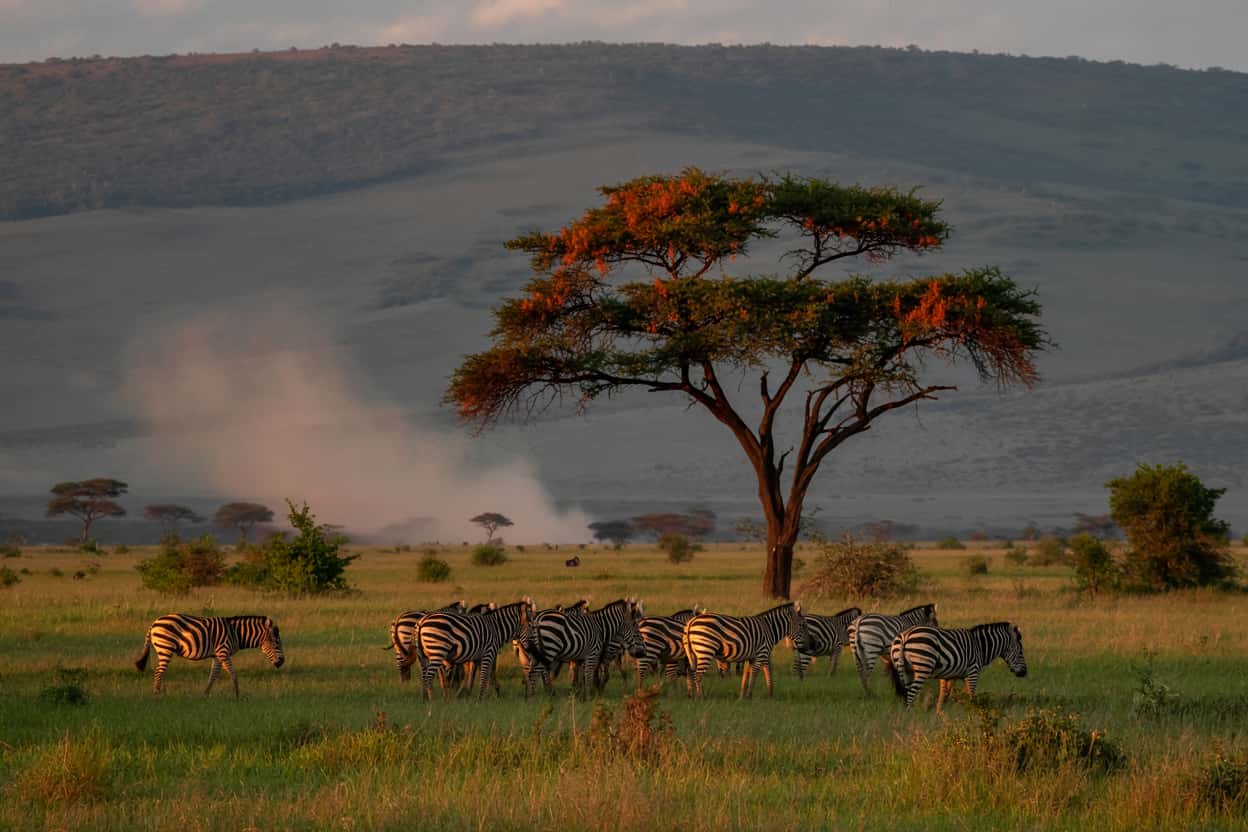
"Best time" depends on what you're optimising for: wildlife concentration, scenery, weather comfort, avoiding crowds, or saving money. Often these pull in opposite directions — peak game viewing usually collides with peak prices and peak occupancy.
Below is a destination-by-destination breakdown of when to go and why.
Kenya — Maasai Mara
- Peak: July–October — Great Migration herds in the Mara
- Excellent: January–February — calving on the southern conservancies
- Avoid: April–May long rains; many camps close
Tanzania — Serengeti & Ngorongoro
- Peak: January–March (calving in southern Serengeti), June–July (river crossings in north)
- Excellent: All year in central Serengeti — game is resident
- Avoid: Mid-March to mid-May long rains
Botswana — Okavango Delta & Chobe
- Peak: June–October — flood high, dry-land game concentrated at water
- Shoulder: November–December — dramatic skies, lower prices, baby animals
- Avoid: January–March deep wet season for road access
South Africa — Kruger & Sabi Sands
- Peak: May–September — dry, cool, sparse foliage means easy spotting
- Excellent: April and October shoulder months — green but visible
- Year-round: Premium private reserves operate every month
Namibia — Etosha & Sossusvlei
- Peak: May–October — dry months drive game to Etosha's waterholes
- Photography sweet spot: April–May, with green grass and rain-washed light
- Avoid: January–March if you're chasing big game (high water dispersal)
Zambia & Zimbabwe — South Luangwa, Mana Pools
- Peak: July–October walking-safari season
- Spectacular: October — hot, but elephants and predators concentrate at the rivers
- Closed: Many camps shut December–March (wet season, impassable roads)
Uganda & Rwanda — Gorilla trekking
- Peak: June–September, December–February — drier trails, easier hikes
- Excellent value: March–May and October–November — same gorillas, lower prices, wetter ground
- Permits sell out 6–12 months ahead in peak months
North Africa — Egypt & Morocco
Different climate logic. Avoid summer (June–August) extreme heat; aim for the cooler shoulders.
- Egypt: October–April (cool, dry); avoid July–August in Luxor and Aswan
- Morocco Sahara fringe: October–April; spring and autumn are ideal
- Atlas Mountains for trekking: April–June, September–October
If you only have to pick one month
September — across the largest swath of the continent, you get dry-season game viewing, tolerable temperatures, no major rain risk and reasonable shoulder-season pricing. It's the safest single month if you're not chasing a specific event.