
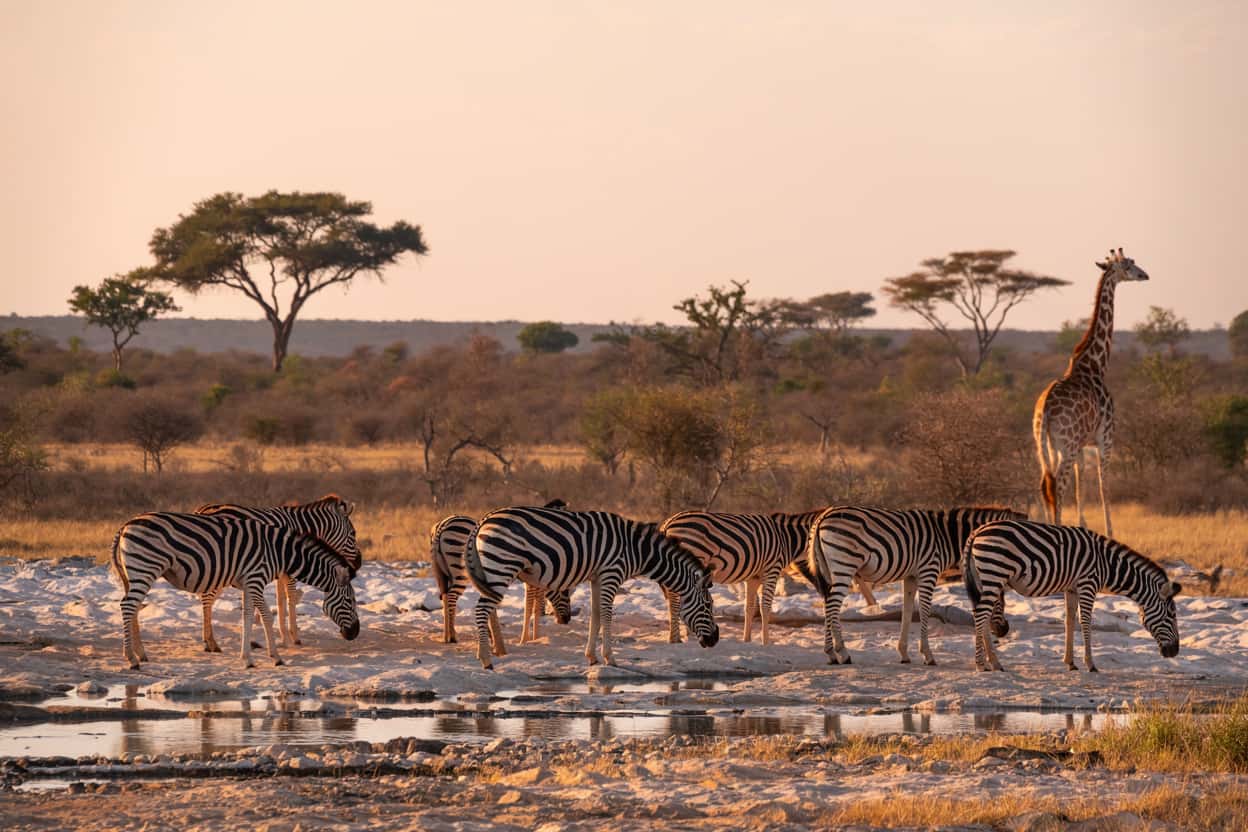
Most safari marketing pushes the dry months. Animals concentrate at water, foliage is sparse, and big-five sightings come easily. But "best for spotting predators" isn't the only reason to come to Africa — and the green season has advantages most travelers underestimate.
Here's what you trade and what you gain when you choose to travel in the wet.
What 'green season' actually means
In Southern Africa, broadly November to April. In East Africa, March to May (long rains) and a shorter break in October–November (short rains). It does not mean constant rain — most days you'll get a spectacular afternoon thunderstorm, then clear skies again.
What you gain
- Prices typically 25–45% lower than dry-season rates
- Fewer vehicles at sightings — a private experience even in popular parks
- Calving and birthing season — newborn impalas, wildebeest and zebras in numbers
- Resident migrant birds in full breeding plumage; serious birding peaks now
- Photographic conditions improve — dramatic clouds, rain-washed air, lush foreground
- Better availability — top camps that book a year out are bookable inside weeks
What you trade
- Game viewing requires more patience — animals disperse with surface water
- Some lodges close for the wettest months (especially in Mana Pools, South Luangwa)
- Road access in remote areas can be limited — fly-in is sometimes the only option
- Mosquito populations spike — anti-malarial discipline matters more
- Some activities (bush walking) limited by terrain and visibility
Best green-season experiences
- Calving in the southern Serengeti (Jan–Feb) — peak predator action
- Liuwa Plains, Zambia (Nov–Feb) — wildebeest migration, vast empty plains
- Madagascar (Nov–Mar) — lemurs and reptiles most active
- Birding in the Okavango Panhandle (Dec–Mar) — Pel's fishing owl, slaty egret
- Iconic landscape photography in Namibia — green Sossusvlei is rare and otherworldly
Practical packing additions
- Lightweight waterproof shell jacket
- Quick-dry clothing — cotton stays soaked
- Dry bag for camera gear, phone and documents
- Insect repellent with DEET 30%+ or picaridin
- Antimalarial regimen confirmed with your doctor