
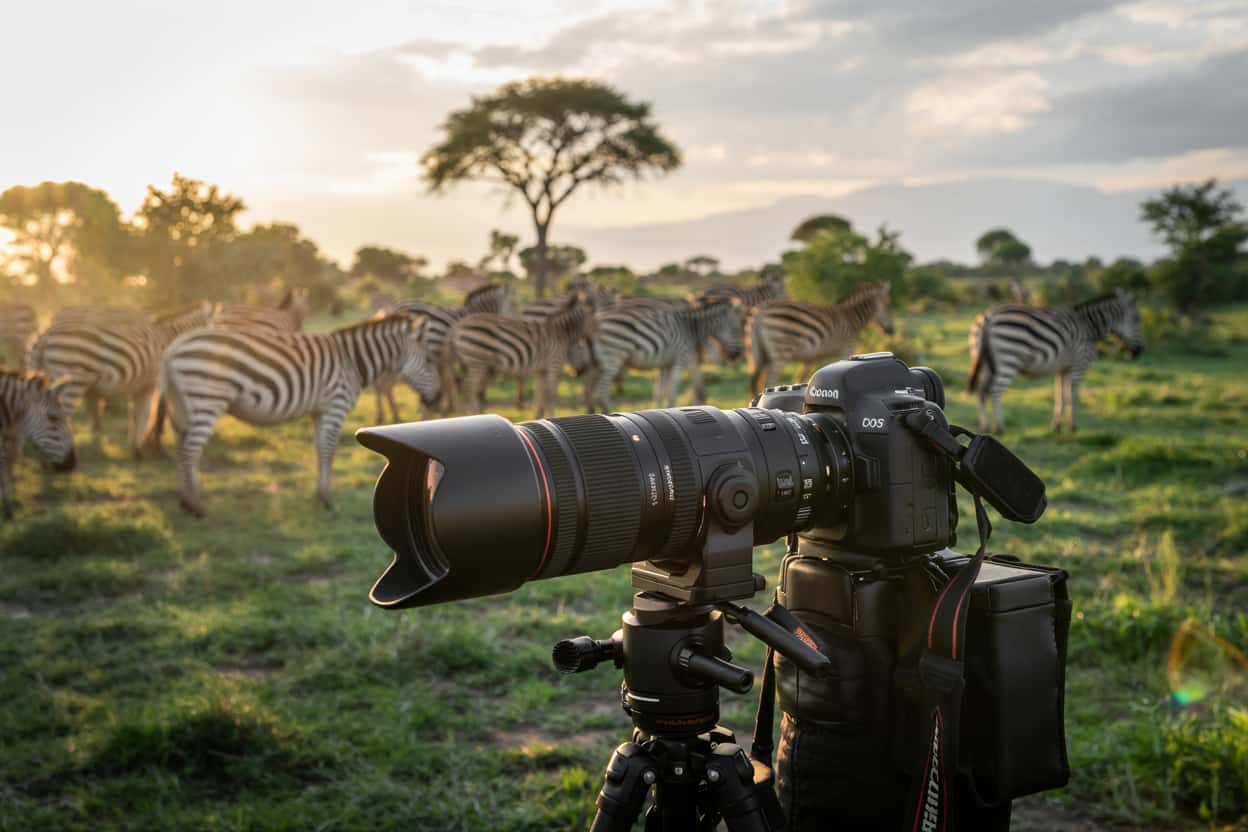
Wildlife photography rewards reach, speed and stability — three things that get expensive fast. The good news: a thoughtful kit beats an expensive one. The bad news: weight limits on bush flights are real, and you'll feel every spare kilogram.
This guide gives you three honest setups depending on where you sit on the photographer spectrum.
Setup 1: Phone-only — perfectly fine
Modern phones produce excellent images for sharing and family albums. They struggle with distant wildlife — phone "zoom" past 3x is mostly software interpolation — but for landscapes, lodges, and animals close to the vehicle they're more than enough.
- Bring a small clip-on tele lens or a phone-mounting bracket for binoculars (digiscoping)
- Carry a portable 10,000+ mAh power bank — bush charging is intermittent
- Buy a sealed phone pouch for dust — Kalahari and Etosha will eat your charging port
Setup 2: Enthusiast — one body, two lenses
The most-recommended safari kit and the one most operators see in vehicles: a mid-range mirrorless or DSLR with a long zoom for wildlife and a wider lens for environment shots.
- Body: any current APS-C or full-frame mirrorless with good autofocus
- Telephoto: 100–400mm or 150–600mm zoom — covers 95% of subjects
- Wide-to-mid: 24–70mm or 24–105mm for scenes, lodges, people
- Two batteries minimum, four if you can — bush days drain them
- 128GB+ memory card per shooting day, with a backup card
Setup 3: Serious / pro — what changes
- Two bodies — one tele, one mid — to avoid lens swaps in dust
- Fast prime in the 400–600mm range for low light at dawn and dusk
- Beanbag rather than a tripod — vehicles can't accommodate tripods well
- Laptop or dedicated card backup device — back up at the end of every drive
- Insurance specifically covering camera gear in the bush — your travel policy may not
Accessories that earn their weight
- Bean bag (small, fillable on arrival) — the single best safari support
- Lens cleaning kit with rocket blower — dust is the enemy
- Rain cover for body + lens — green-season showers come fast
- Polariser for scenes and water; ND filter for waterfalls and bright skies
- Soft-sided camera bag that fits under your seat on a 12-seater bush plane
Settings to dial in before you arrive
- Continuous autofocus + animal eye detection if your body has it
- Burst mode at the highest reasonable rate your buffer can sustain
- Auto ISO with a maximum that you trust your sensor at (often 6400 for modern bodies)
- Back-button focus — separates focus from shutter, much easier for moving subjects
Next step
Looking for a photographic safari?
Some operators run dedicated photography vehicles with bean bags, fewer guests, and guides who understand light. We can point you at the best ones.