
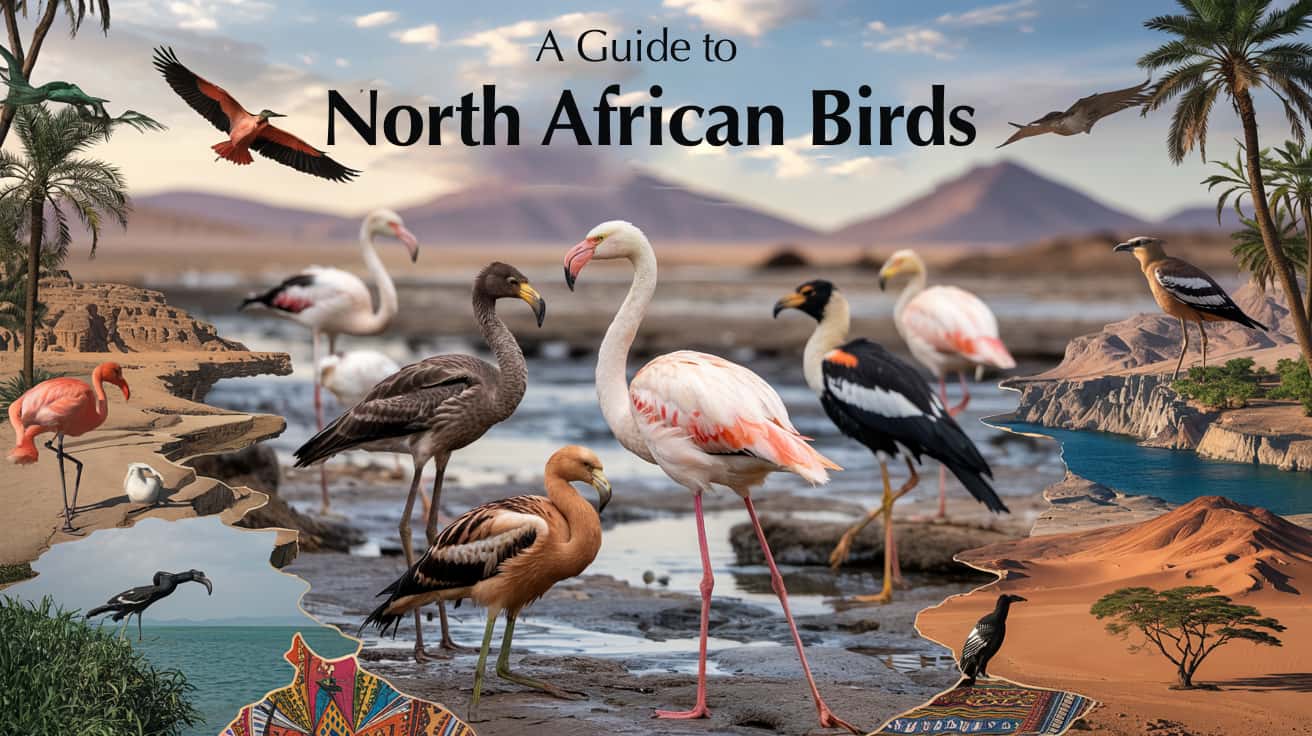
North Africa sits at one of the world's great migration crossroads. Birds funnel through the Strait of Gibraltar and the Sinai every spring and autumn in spectacular numbers. The region also hosts a strong cast of resident specialists — desert sparrows, lanner falcons, Egyptian vulture, Atlas finches — that most birders only see here.
This guide covers when to go, where, and what to expect.
Spring migration (March–May)
The peak season for many birders. Northbound passerines, raptors and waterbirds cross the Mediterranean in vast numbers, and breeding plumage makes identification much easier.
- Strait of Gibraltar — raptor migration peaks late March to early May
- Tarifa to Tangier — short crossing, exceptional concentration of honey buzzards, booted eagles, black kites
- Sahara fringe (Erg Chebbi, Merzouga) — desert breeders setting up territory
- Atlas Mountains — alpine accentor, crimson-winged finch, Moussier's redstart
Autumn migration (August–October)
- Larger numbers than spring but in less dramatic plumage
- Bonelli's and short-toed eagles, vultures, kites concentrating along the coasts
- Wader passage at Merja Zerga, Ichkeul and the Nile Delta
- Storks and pelicans in large flocks at staging wetlands
Winter (November–February)
Often overlooked but excellent for waterfowl, large numbers of European wintering species, and easier access to desert sites before the heat returns.
- Greater flamingo at Merja Zerga and Ichkeul — flocks in the thousands
- Ducks, geese and waders in Mediterranean coastal lagoons
- Resident desert species are easier — they're not nesting, easier to flush
- Egyptian Nile cruises for kingfishers, terns and African specialities
Summer (June–August)
Hot, often punishingly so in the south. Birding switches almost entirely to dawn and dusk, with high elevation and coastal sites the only viable options through the day.
- Atlas high country — alpine specialists at coolest elevations
- Coastal Atlantic Morocco — cooler than the interior, breeding seabirds
- Avoid Sahara fringes through midday; safe to bird only first/last light
- Lower visitor numbers — easier access to popular sites
Top sites by country
- Morocco — Boumalne Dadès (desert specialists), Souss-Massa (bald ibis, Eleonora's falcon), Oued Massa, Atlas Mountains
- Tunisia — Ichkeul National Park, Ras El Mar coastline, Sahara crossings via Tozeur
- Egypt — Lake Qarun, Wadi El Rayan, Nile Delta wetlands, Sinai mountain ranges
- Algeria — under-visited but rewarding; Tassili N'Ajjer for Sahara specialists
- Western Sahara / Mauritania — for serious birders chasing Saharan endemics
Logistics
- Most birding guides in Morocco speak French; English availability is improving
- Standalone birding tours work well; pair with culture/ landscape interest for travelling partners
- Birding code of conduct matters in nesting deserts — keep distance from breeding pairs
- Bring a scope; many sites are at distance and identifications hinge on detail