
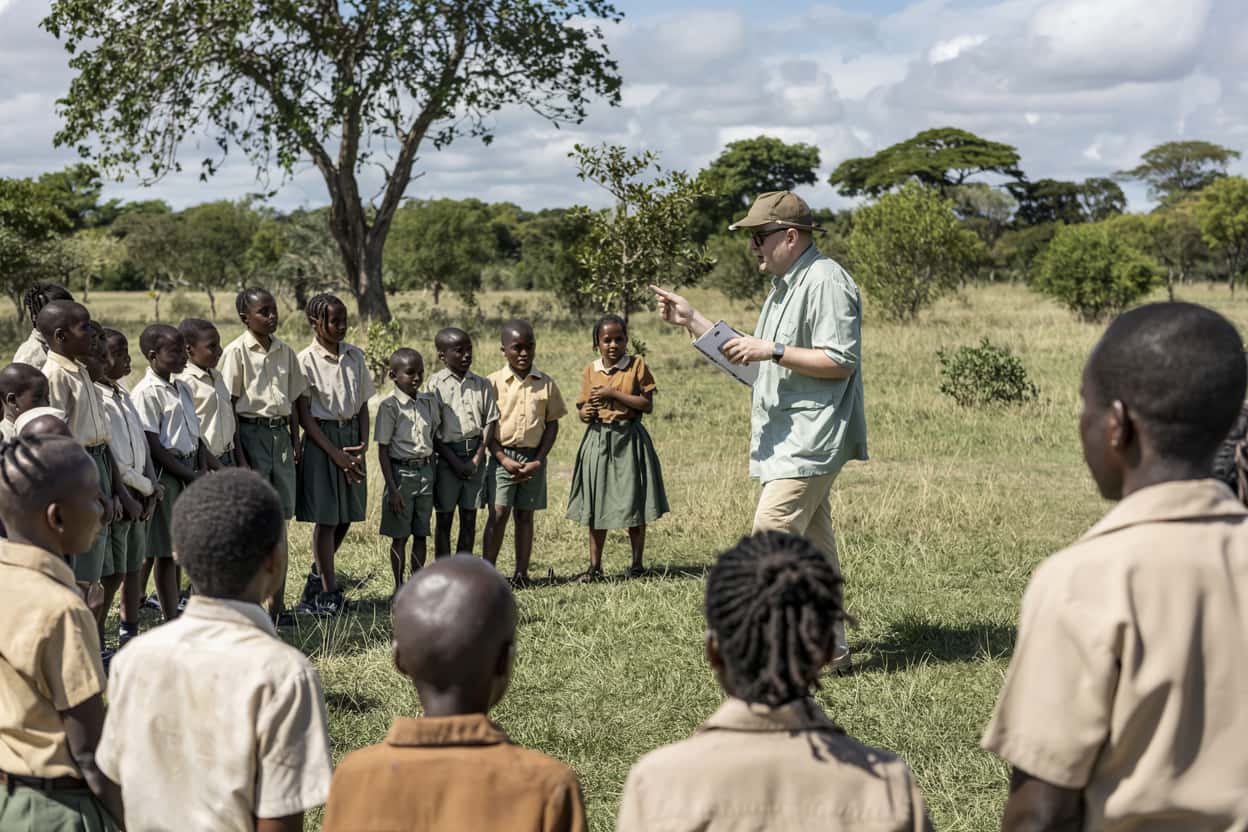
Anti-poaching, fencing and rapid-response teams handle the immediate threats. Education builds the constituency that decides whether wildlife matters at all. In a region with a young, fast-growing population, the question is no longer "how do we save the rhino" — it's "how do we make sure the generation now in primary school grows up wanting to save the rhino".
School-based conservation education
- Wildlife Clubs of Kenya — running since 1968, now active in 1,000+ schools
- Wildlife Friends Foundation, EWT and WWF run national curriculum partnerships
- Bush schools in lodge concessions — bringing kids on game drives, often their first time
- Teacher training — without trained teachers, curriculum reform doesn't reach classrooms
- Scholarships for conservation degrees at regional universities
Community awareness programmes
- Human-wildlife conflict mitigation — predator-proof bomas, beehive fences, chili farming
- Radio campaigns — still the highest-reach medium across rural Africa
- Mobile cinemas and pop-up exhibits in communities bordering parks
- Religious-leader engagement — pastors, imams and traditional leaders carry weight on conservation messaging
Visitor education on safari
The hours spent with a guide on a game drive are an extraordinary education channel — for the visitor, and through them for the people they tell at home. Good lodges treat this as a deliberate part of the experience.
- Pre-arrival reading lists, lodge libraries and species briefings
- Researcher and ecologist talks at sundowners or after dinner
- Behind-the-scenes visits to anti-poaching units, K9 kennels, rehabilitation centres
- Honest discussion of conservation tradeoffs — culling, translocation, fencing — not just heart-warming stories
How to support education programmes
- Sponsor a school's wildlife club — many lodges run direct partnerships
- Donate books, binoculars and stationery via vetted programmes (not random village handouts)
- Fund teacher-training cohorts via NGOs like the African Wildlife Foundation
- Attend lodge talks and ask questions — engaged guests change what lodges deliver
- Talk about your trip when you get home — that's the demand-side ripple